

Siblings Always Fighting Over Play? How to Help Them Cooperate and Bond
Sibling squabbles during play are normal. Here are gentle, research-backed ways to help your kids shift from fighting to playing as a team, taking turns, and bonding.
You've just poured your coffee when a shriek erupts from the living room: "That's mine!" — followed by tears and a tug-of-war over a toy. If you have more than one child, this scene probably feels familiar. First, take a deep breath of relief: siblings squabbling during play is completely normal, and it doesn't mean you're doing anything wrong.
Why do they keep fighting?
According to the American Academy of Pediatrics (AAP), a moderate amount of sibling rivalry is actually a healthy sign that each child is assertive enough to express their own needs and wants. Young children also find it hard to see things from another person's perspective — they naturally assume the world revolves around them. "Thinking about the other person" is a skill that takes time and practice, not something kids are born with.
ZERO TO THREE notes that turn-taking begins remarkably early — as young as 6–9 months, through back-and-forth games like peekaboo. As children grow, cooperative play teaches them to negotiate, compromise, and work toward a shared goal. These are skills they carry into the classroom and far beyond.
6 gentle ways to help them play together
1. Prompt them to be partners, not opponents
When you see tension rising, set up a scenario where they're on the same team. The AAP suggests using characters your kids love: "You be the captain, you be the navigator — steer the ship through the storm together!" Just be sure to have them switch roles after a while so everyone gets a turn at the favorite part.
2. Choose games that require cooperation to win
Instead of win-or-lose games, look for ones where both kids must coordinate to succeed. The AAP recommends building activities, strategy games, word searches, and hidden-picture games. A study on the NCBI library even found that preschoolers shared more with others after playing cooperatively than after playing competitively.
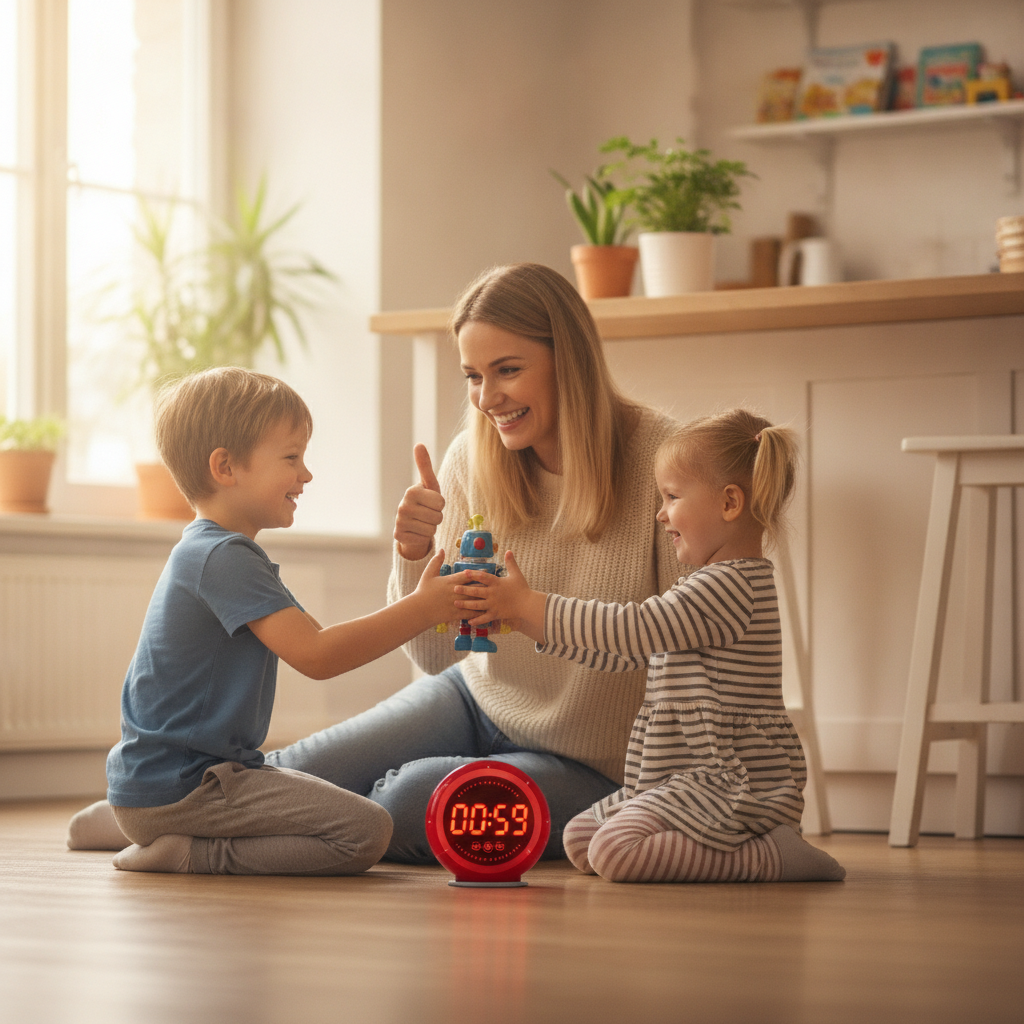
3. Use a turn-taking timer
If two kids are fighting over one toy, set a timer. The AAP suggests letting the children decide whether each turn is 5 or 10 minutes, and putting them in charge of handing the toy over when time is up — then praising them when they do.
4. Praise cooperation, avoid comparisons
When your kids resolve an argument on their own, praise it right away. At the same time, the AAP cautions against comparing or labeling ("why can't you be good like your sister?"). Comparisons can make a child feel less loved than their sibling.
5. Let them resolve minor conflicts
For small disagreements, you don't have to referee every time. The AAP advises not taking sides; if your kids try to pull you in, gently explain that they can figure out how to get along. Over time, they learn to negotiate on their own.
6. Make time for whole-family play
A board game, a game of catch, or a movie night — shared activities create a peaceful way for siblings to be together, and keep you connected to your children.
Screens can be a place to practice taking turns
A cooperative game on the tablet can become a small practice ground for team play — as long as a grown-up sits nearby to guide it. Wolfoo Team Up! is designed so two players coordinate to clear each level, which makes it a nice way to practice taking turns ("your turn to tap!") and celebrating together when the team wins. These are specific skills — yielding a turn, waiting, coordinating — not a promise that your child will "get smarter."
Let's be honest: no game can "cure" sibling rivalry. Rivalry is a natural part of growing up. A game is just one small tool; what really makes the difference is you sitting beside them, modeling and encouraging. As for ads in the game: any ads shown are age-appropriate and not personalized to a child's data.
Frequently asked questions
Is it bad that my kids fight so much?
Not necessarily. The AAP says a moderate level of rivalry is a healthy sign that each child can stand up for their own needs. What matters is that they gradually learn to work through conflict.
At what age do children learn to take turns?
The earliest seeds appear at 6–9 months, but fluent turn-taking takes practice throughout the preschool and grade-school years. Be patient and offer plenty of chances to practice.
Should I step in every time they argue?
For minor disagreements, let them try to work it out and avoid taking sides. Step in when things get too heated or unsafe.
Sources
- American Academy of Pediatrics – HealthyChildren.org, "Siblings as Playmates: 5 Ways to Help Prevent Squabbles"
- American Academy of Pediatrics – HealthyChildren.org, "Sibling Rivalry"
- ZERO TO THREE, "Tips on Helping Your Child Learn to Cooperate"
- NCBI/PMC study, "Playing a cooperative game promotes preschoolers' sharing with third-parties"