What Age Should Kids Learn the Alphabet? A Gentle, Playful Guide
Most kids start recognizing letters around 2-3 and pick up speed by 3-5 — but every child is different. Here's how to teach letters gently, through play.
“Some kids read fluently at 3, but mine is 4 and still mixing up letters…” If that worry sounds familiar, you're far from alone. The good news: there is no single “right age” to learn the alphabet, and pushing too early often backfires.
In short: many children begin recognizing a few letters (often the first letter of their name) around age 2-3, with a clear acceleration between 3-5. But every child moves at their own pace — what matters more than age is whether your child enjoys playing with letters.
What age is “right” for the alphabet?
Common language milestones look roughly like this:
- Ages 2-3: start recognizing familiar letters (those in their name), enjoy flipping books, “read” from memory.
- Ages 3-4: recognize more capital letters, begin linking letters to sounds.
- Ages 4-5: know most capital letters and some lowercase; many start blending simple sounds.
These are references, not a scorecard. The American Academy of Pediatrics (AAP) stresses that literacy starts with shared reading from an early age — not early drilling.
Signs your child is ready
- They point at letters and ask “what's this?”
- They love hearing the same book or alphabet song again and again.
- They start “writing” letter-like scribbles.
When you see these signs, follow your child's curiosity — don't turn it into a worksheet.
4 gentle, play-based ways to teach letters
1. Read together every day
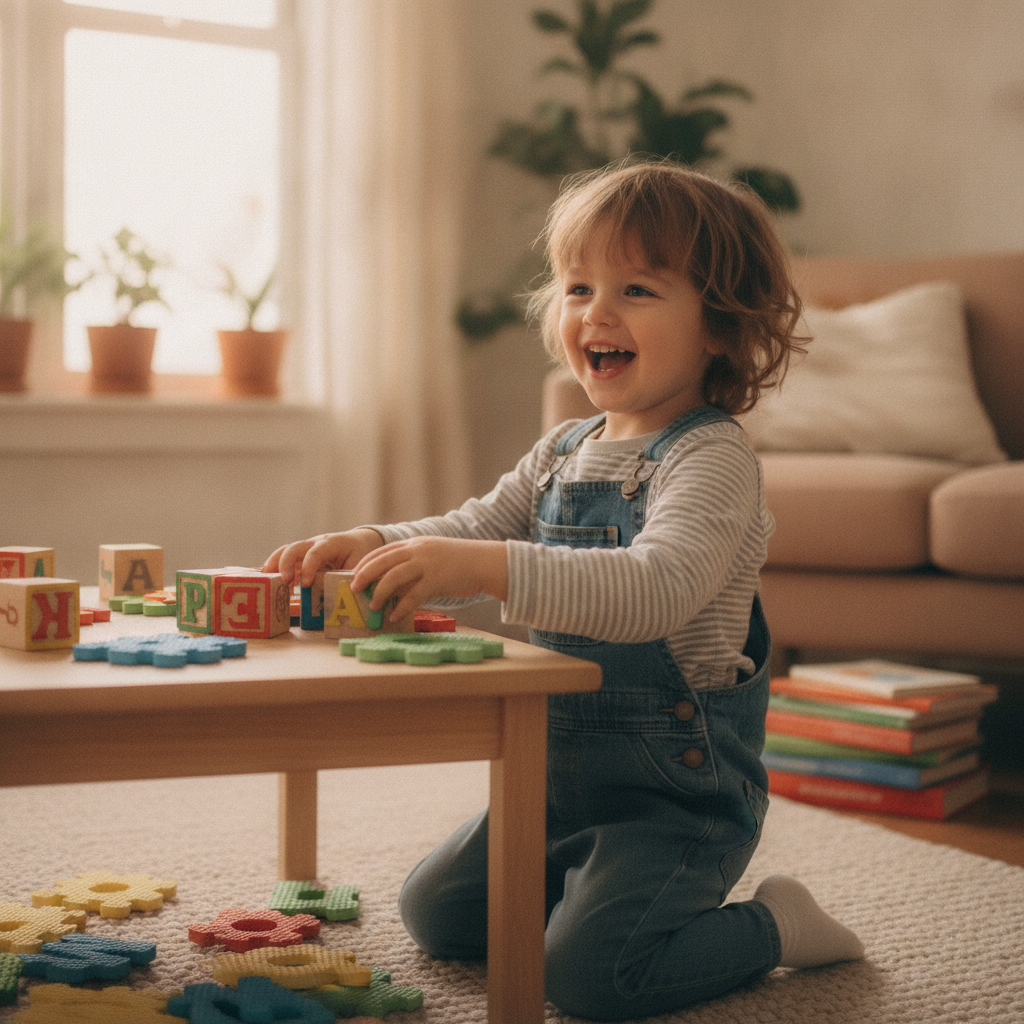
Per the AAP, early shared reading is the best way to grow language. Point to words as you read so letters connect to sounds and meaning.
2. Sing the alphabet & play with sounds
The ABC song and rhymes build memory naturally — no “studying” feeling.
3. Put letters into daily life
Point out letters on milk cartons, signs, your child's name on the door. Letters everywhere = learning all the time.
4. Letter & number recognition games
Interactive games make practicing letters fun. You can try Wolfoo's letters & numbers game together — free, playable right in the browser, COPPA-safe, and great to play alongside your child. The key is to play together and chat, not to leave them alone with a screen for long.
What to avoid
- Pressure & rote drilling: can make kids fear letters.
- Comparing to peers: every child has their own pace.
- Long screen sessions: keep learning games short and shared.
FAQ
My child is 5 and doesn't know all the letters — is that a problem?
In most cases it's normal; kids learn letters on very different timelines. Keep it playful and read together often. If you notice persistent speech delays or trouble focusing, talk with your pediatrician.
Learning letters isn't a race. When letters feel fun, reading follows naturally. Your gentle company is the most reliable “secret” of all. 💛