
Playing on the Same Team: Why Cooperative Games Bond You With Your Child and Reduce Squabbles (Ages 3–7)
Does your child always need to win? Try playing on the same team. Why cooperative games help kids 3–7 squabble less and bond more with you.
"I won! I won! You lost!" — and five minutes later, when the next round doesn't go their way, come the tears and the flipped game board. If game time at your house often ends in a squabble or a meltdown, you are far from alone. For kids aged 3–7, losing genuinely stings, because the part of the brain that manages big feelings is still growing. The good news: there's a gentler way to play together — playing on the same team.
What is cooperative play — and how is it different from competing?
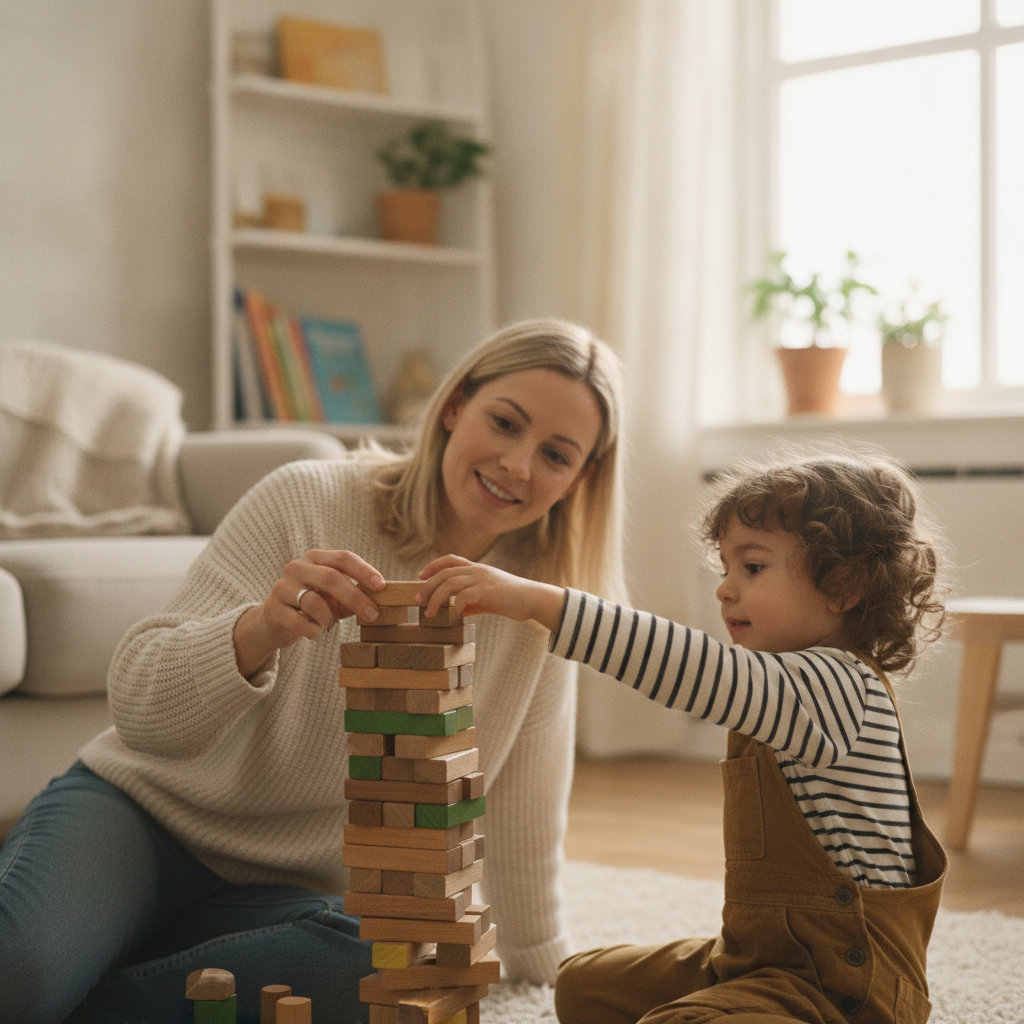
In a competitive game, someone wins and someone loses. In a cooperative game, everyone is on the same team, working toward one shared goal: build one tall tower together, get all the characters to the finish line, finish the "mission" as a group. Nobody loses — you either win together or try again together.
Child-development experts describe cooperative play as the stage when children start coordinating with others toward a common goal, usually clearest from around ages 4–5. But you can plant the seeds earlier — even a 3-year-old loves the feeling of "me and you, doing it together."
Why the same team bonds you with your child
According to the American Academy of Pediatrics report The Power of Play (2018) and Ginsburg's landmark report (2007), the shared joy and attunement parents and children experience during play help regulate the body's stress response and strengthen the parent–child bond. In other words, those minutes of laughing together and cheering "we did it!" aren't just fun — they actually help your child feel safe and connected.
When you're on the same team, your child looks to you not to beat you, but to team up, to celebrate, to figure it out together. That's the raw material of connection.
Why it reduces squabbles
Cooperative play gives kids countless chances to practice the very skills that fall apart when they lose: talking through a problem, compromising, and finding a solution everyone can live with. Because no one loses, your child doesn't need to get defensive or dig in — their hands are free to listen and cooperate. Research on cooperative play has also found that children can learn more when they work through a task as a pair rather than against each other.
4 ways to play on the same team at home
- Set a shared goal. "Should we build a tower taller than the chair?" One team, one target.
- Swap 'you vs. me' for 'we.' Try: "Let's try that again together — what if we change our plan this time?"
- Celebrate effort, not the result. "You were so patient! We're almost there."
- When it falls apart, make it a shared laugh. Tower crashed? "Whoa! Let's rebuild — sturdier this time!" — instead of looking for who's to blame.
Try a same-team game with your child
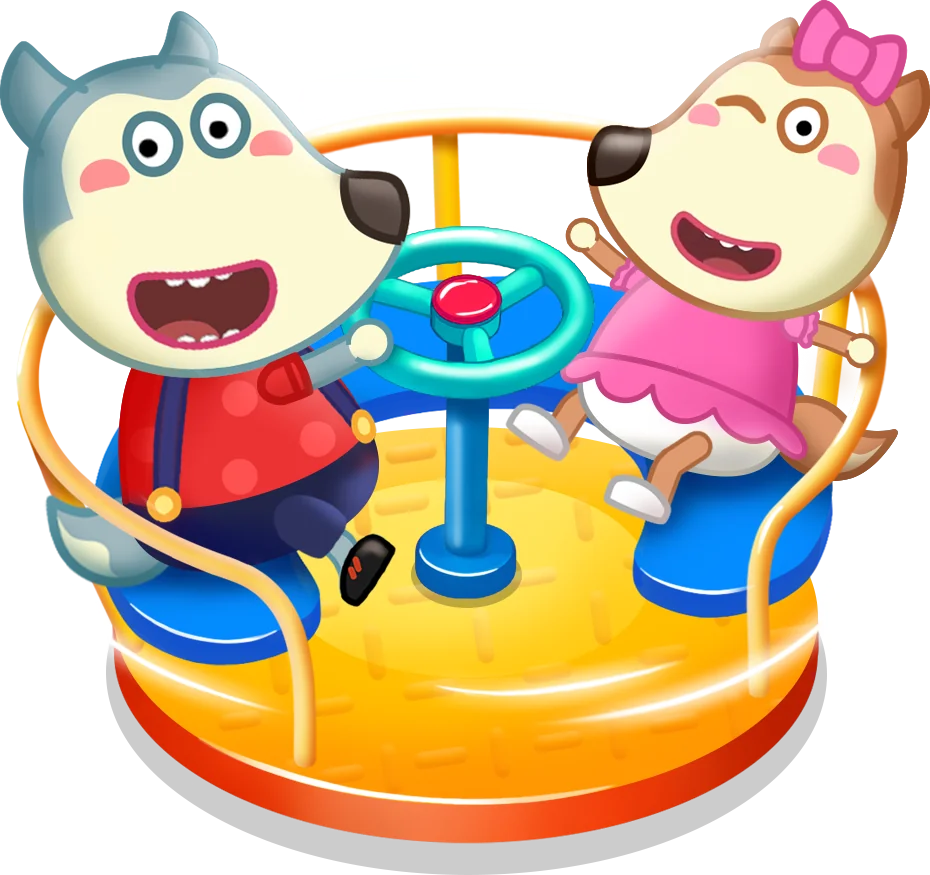
If you'd like a low-key activity to start, sit beside your child and play Wolfoo Team Up! — a game where the characters have to coordinate to get through challenges together, which fits the same-team spirit nicely. You can also try Wolfoo Connect Friends and talk through your next move as a pair.
To be honest and clear: a game is just one excuse to play together — it can't replace the minutes you spend truly sitting down beside your child. No game can "fix" losing-related meltdowns; that takes time and your steady presence. Wolfoo games are free to play, designed to be COPPA-safe, and include tools for parents to stay in control; any ads are age-appropriate and non-personalized. Play with your child and set clear time limits.
FAQ
My child is only 3 — is cooperative play too early?
Not at all. A 3-year-old won't coordinate smoothly yet, but loves the feeling of "doing it with you." Keep the goal simple (stack a few blocks, tidy up together) and celebrate big.
Should I drop competitive games entirely?
No need. Kids still need to learn to cope with losing. But if every round ends in tears, mix in more same-team play so your child banks plenty of happy play experiences first, then return to competitive games when they're more ready.
How long should we play?
For young children, 10–20 focused minutes is usually plenty. The quality of your presence matters more than the length.