

Short Attention Span in Young Kids: Normal or Worrying?
Preschoolers focusing for only a few minutes is normal. Here is how to understand and gently nurture your child's attention.
If your child can only sit still for a few minutes before darting off, in most cases this is completely normal for the preschool years. Attention develops gradually with age, and a child losing interest quickly is rarely a cause for concern.
How long should young children focus?
A rule of thumb many child-development specialists cite is that children can typically focus on a self-chosen task for roughly two to five minutes per year of age. So a three-year-old may concentrate for only 6–15 minutes — and that is age-appropriate.
Attention also depends on context. Your child might happily build puzzles for 20 minutes yet be unable to sit still for two minutes on demand. That is because children focus far better when they lead an activity they enjoy.
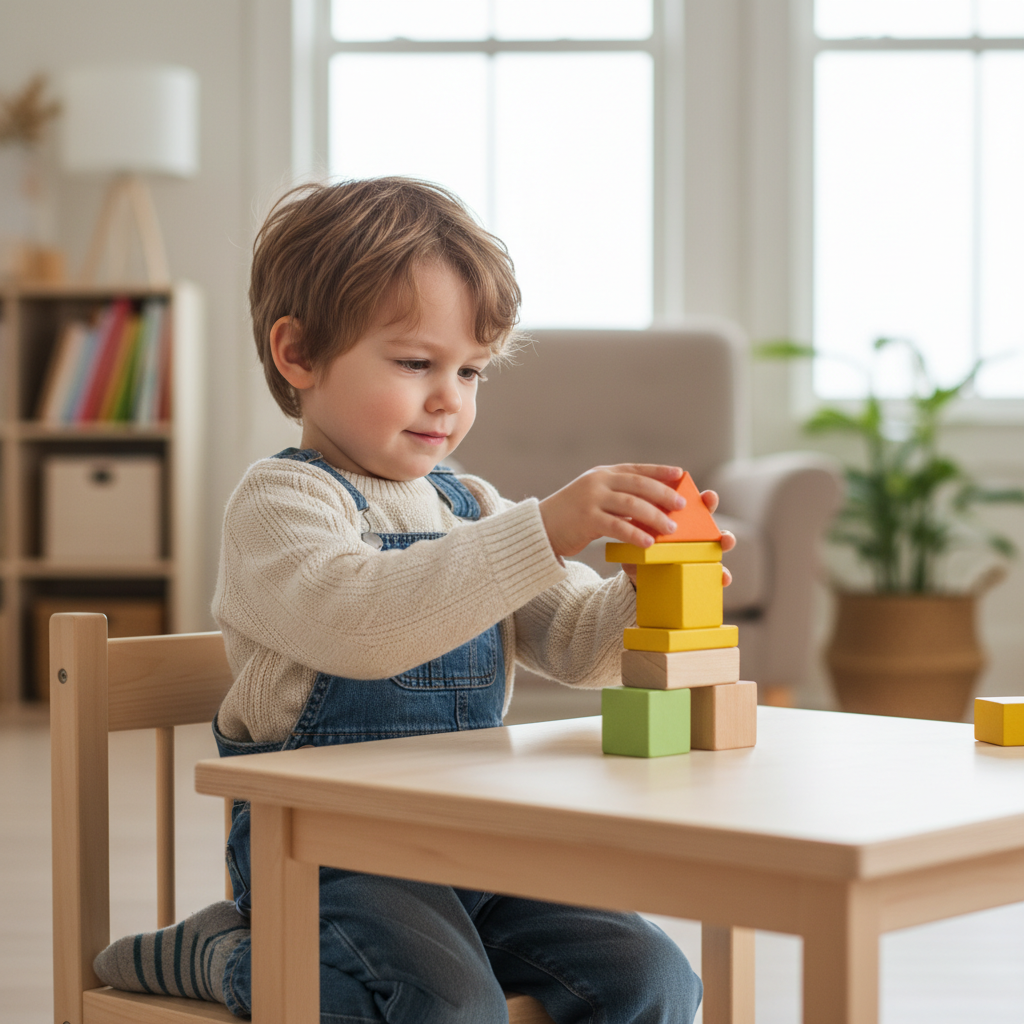
Why kids lose interest — a developmental view
The brain regions that control attention and self-regulation (known as executive function) are still forming throughout early childhood. According to the American Academy of Pediatrics (AAP), interactive play is how children naturally practise these skills — planning, remembering, taking turns and managing emotions.
In other words, a short attention span is not about a child being "naughty" or "lazy" — it is a growing brain at work. Our job as parents is to offer gentle, pressure-free chances to practise.
How to nurture focus together
- Start short, build up. Do an activity together for five minutes, then gradually extend it as your child is ready.
- Reduce distractions. Turn off background TV and clear away extra toys while your child works on one thing.
- Praise effort, not results. Try "You kept trying again and again — that's real persistence!" rather than "You're so smart."
- Let your child lead. Children concentrate noticeably longer when they choose the activity.
- One thing at a time. Avoid screens during meals — young brains learn attention better doing single tasks.
When should you talk to a professional?
Most children are simply growing. However, if your child consistently struggles far more than peers across all settings — with trouble sitting still, impulsivity, or disruption to daily life — it is worth speaking with a pediatrician or specialist. This is general information and not a substitute for medical advice.
A few gentle games to practise attention
Short games with a clear stopping point are a pleasant way for children to practise focus while having fun. A few on the Wolfoo Game Portal suit this well:
- Wolfoo Memory Match — flip cards to find matching pairs, practising short-term memory and attention.
- Wolfoo Spot the Difference — look closely to find differences, building attention to detail.
- Wolfoo Sequence — remember and repeat a sequence, exercising working memory.
These games are free to play right in the browser, designed to be child-safe under COPPA, include a parental controls page, and show only age-appropriate, non-personalized ads. Treat them as one small activity in the day — ideally played alongside your child — not a replacement for active play or school learning.
Frequently asked questions
My 4-year-old only focuses for 10 minutes — is that okay?
Completely normal. At this age, concentrating for about 8–20 minutes on a chosen activity is appropriate.
Does screen time make focus worse?
Fast-paced content and long stretches of passive watching can accustom children to high stimulation. Favour slower, interactive content and watch together.
How can I help my child persist longer?
Break tasks into small steps, praise effort, and let your child finish the last part to feel a sense of success.
References
American Academy of Pediatrics (AAP) — "The Power of Play", healthychildren.org.