

My Son Used to Give Up on Every Game — The Small Shift That Helped Him Try Again
Every time he lost, my son slammed the table and yelled "I quit!" One small shift in how I praised him helped him learn to try again. A parent's story.
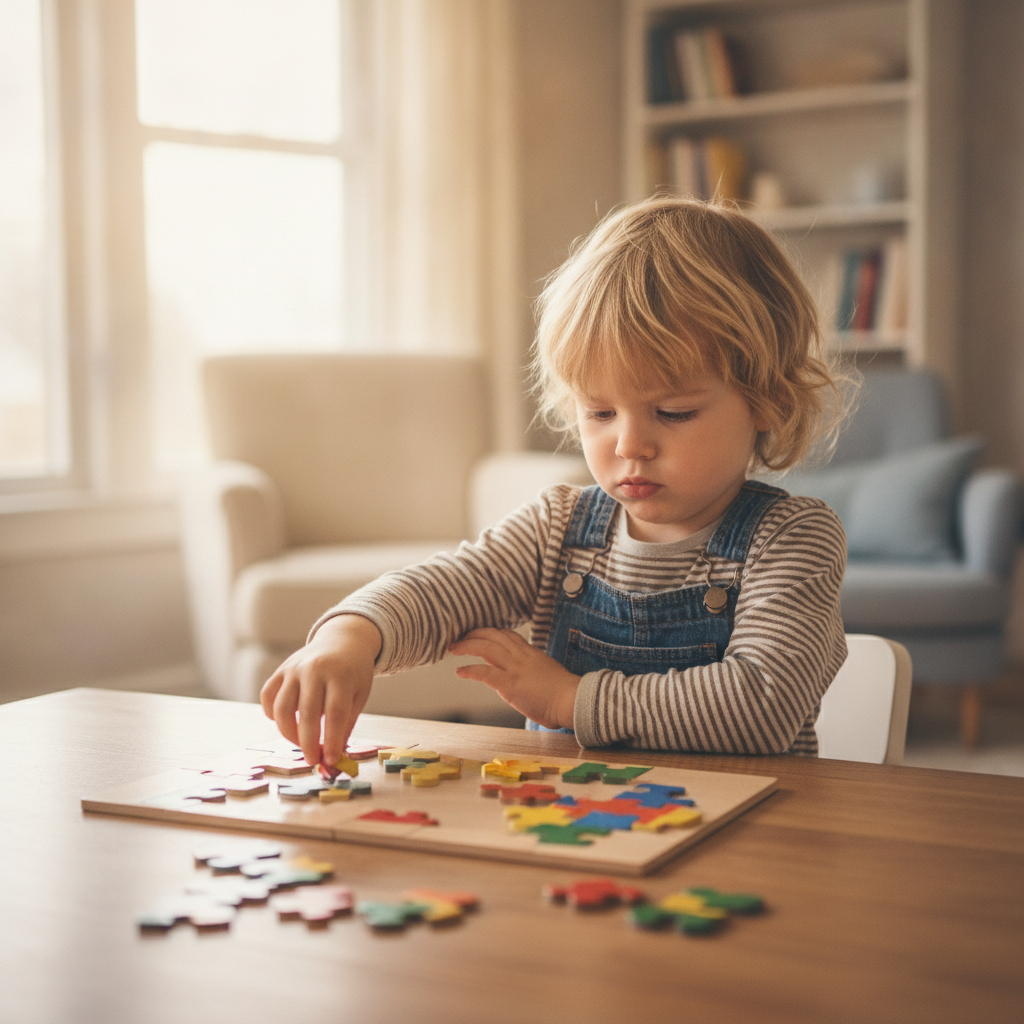
"I quit!" — the familiar yell, paired with a hand slamming the table. My son, then 5, gave up almost the moment a game got hard. One wrong puzzle piece, one lost round — and out came the tears. I'm writing this because I know many parents are standing exactly where I once stood.
When every game ended in tears
At first I thought he "lacked patience" or was "spoiled." I tried soothing, I tried being strict, I tried letting him lose to "get used to it." Nothing worked. The more I pushed, the more he avoided anything hard.
What I realized: he wasn't lazy, he feared failing
Reading about "frustration tolerance," I realized giving up wasn't laziness — it was how he protected himself from feeling "I'm bad at this." The ability to face difficulty is tied tightly to confidence: the more a child fears mistakes, the more they avoid trying. What he needed wasn't more wins, but to learn that mistakes are a normal part of learning.
The small shift: praise effort, not the result
I dropped "You're so smart!" and switched to describing effort: "You tried three times in a row — so persistent!" and "You stopped to think before acting — I love that." I also started narrating my own mistakes lightly: "I got that wrong — no problem, let's try again." I wanted him to see that grown-ups err too — and it's fine.
Using games as a "try-again" practice ground
I chose games where "replay" is easy and low-stakes — losing a level just means tapping restart, with nothing lost. Wolfoo Water Sort became a favorite: each level is a small puzzle, and a mistake just means trying again. Wolfoo One Line taught him that sometimes you erase and redraw; Wolfoo Block Blast let him start a fresh round anytime. I sat beside him, didn't do it for him, and just cheered: "So close — want to try a different way?" The key was keeping the "try again" gentle, with no pressure attached.
(These games are free in the browser, safe for children under COPPA, with age-appropriate ads. I still kept screen time within limits — this was just one of many ways to practice.)
Six weeks later
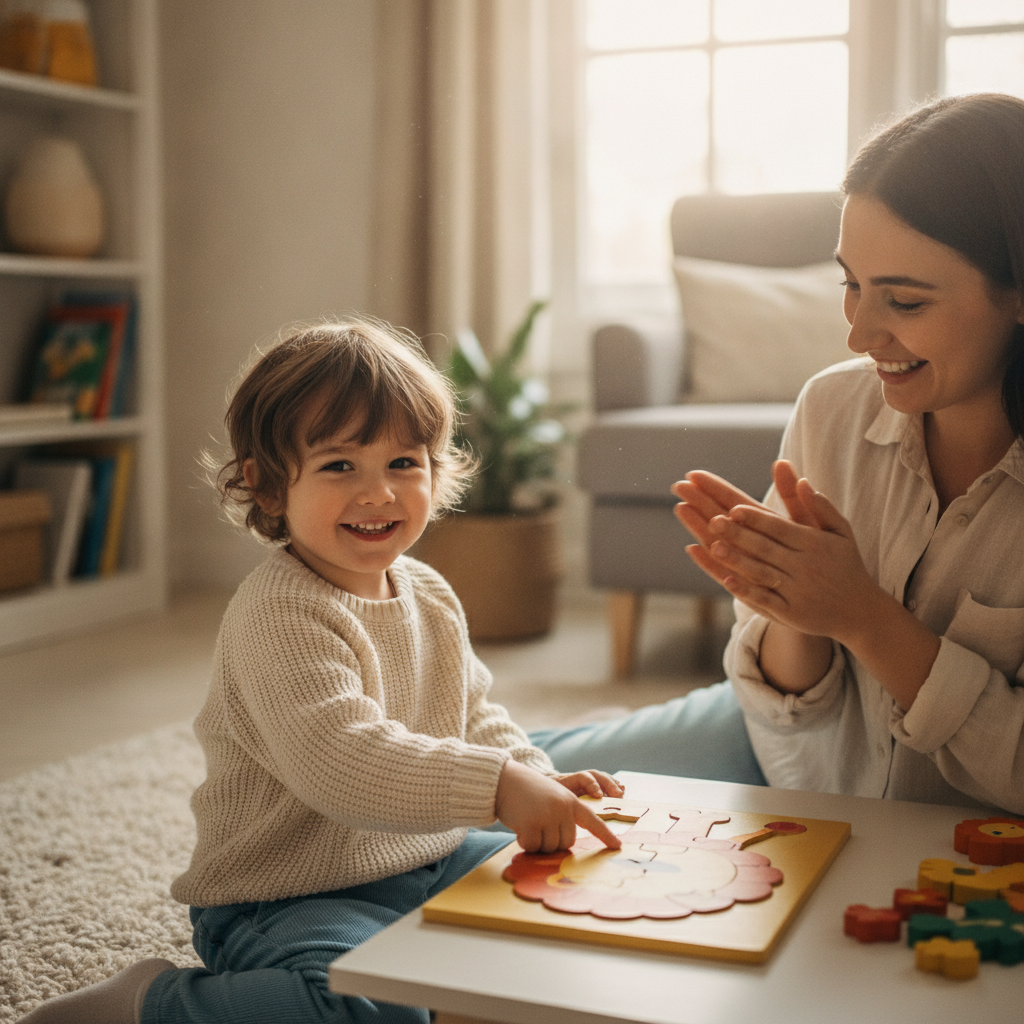
There was no overnight magic. But one afternoon, after a wrong puzzle piece, he paused, took a breath and muttered, "let's try again." I nearly cried. That tiny sentence showed he was learning something bigger than any win: that failure isn't scary, and he can get through it himself.
If your child gives up easily too
- Praise effort and strategy, not just "being smart" or "winning."
- Model it: let your child see you make a mistake and calmly try again.
- Start with "small, safe" failures — where replaying is easy.
- Be patient: frustration tolerance grows slowly, not after one reminder.
Frequently asked questions
Should I let my child win to keep them happy?
Occasionally is fine, but always letting them win removes the chance to learn from losing. It's better to support your child through a loss than to avoid it.
Does praising effort make children complacent?
The opposite. Praising the process helps a child understand that progress comes from trying, so they dare to attempt harder things.
If you're worn out by "I lost" meltdowns, remember: you're not alone, and this can change. The right kind of praise, a safe "practice ground," and a lot of patience — sometimes that's all it takes.
Sources: Banner Health — building frustration tolerance; Davidson Institute — building resilience; American Academy of Pediatrics — The Power of Play.