

Why Does My Child Melt Down When They Lose? Helping Kids Learn to Cope With Losing
Does your child cry, throw things, or quit whenever they lose a game? It's a very normal stage. Here's why — plus gentle, research-backed ways to walk alongside your child.
Your child just lost a round of a matching game — and suddenly there are tears and a swept-off table. It's only a game, so why the big feelings? If that reaction has ever left you baffled, you're not alone. Plenty of families are living the exact same scene.
Here's the reassuring part: struggling to lose isn't being spoiled or selfish. It's a completely normal developmental stage. And staying calm after a loss is a skill — one your child can learn, with you alongside them.
Why is losing so hard for young children?
For kids aged 3–7, losing a game can feel far bigger than adults expect. A few very natural reasons:
- Emotional self-regulation is still forming. According to ZERO TO THREE, children don't really develop this kind of self-control until around 3.5 to 4 years of age — and even then they still need a lot of adult help managing feelings and impulses.
- They don't yet separate "I lost this round" from "I'm not good enough." A small setback can land as a big disappointment about themselves.
- A meltdown is different from a goal-driven tantrum. When feelings overflow, your child is genuinely overwhelmed — not trying to manipulate you.
In other words, your child isn't defying you. They're swept up by their own emotions and don't yet have the tools to settle themselves.
What to do in the heat of the moment
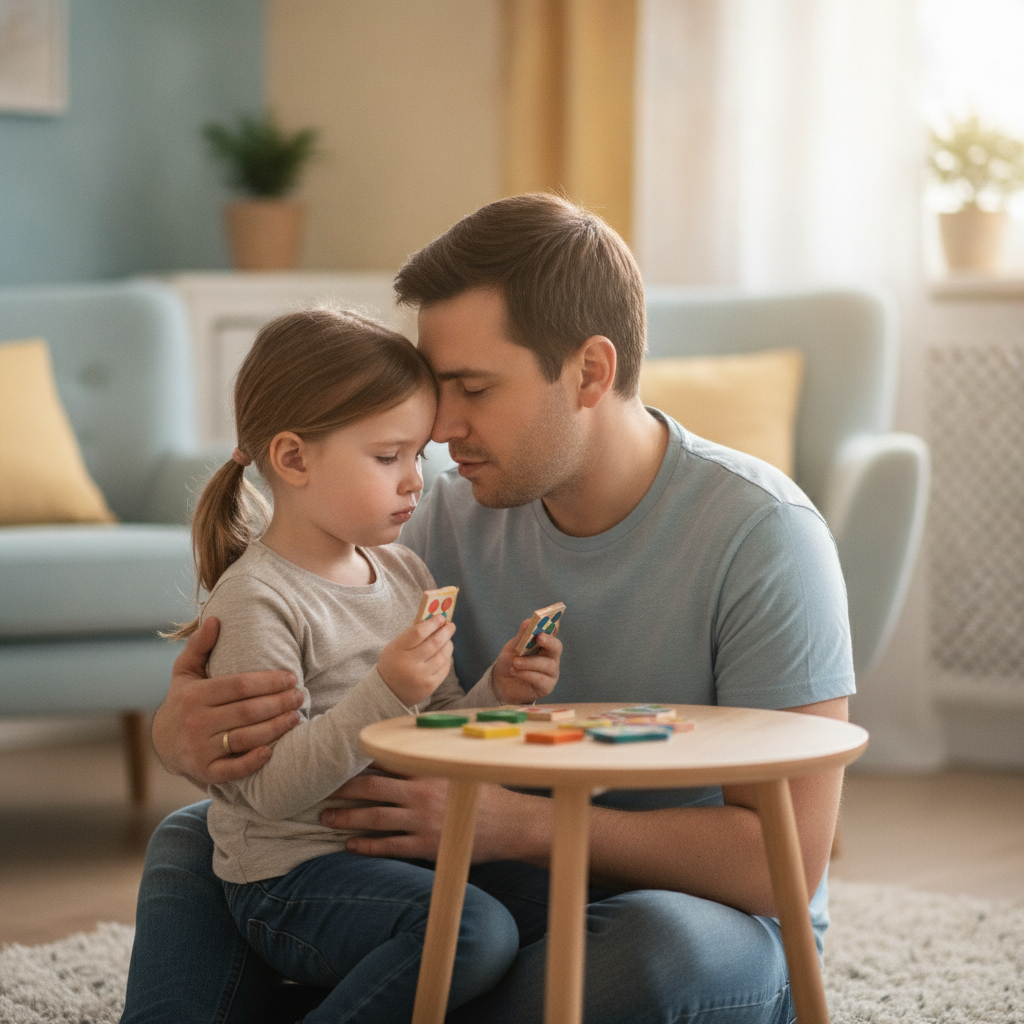
While your child is crying over a loss, it isn't the time for a lecture. What they need most right then is your calm to borrow.
1. Stay calm and name the feeling
Children learn to regulate by co-regulating with a trusted adult — borrowing your steadiness before they can manage on their own (ZERO TO THREE). You might say: "You're upset that you lost, aren't you? I get it. Losing can feel really disappointing."
2. Breathe together and find the "green zone"
The American Academy of Pediatrics (AAP) suggests using "color zones." Instead of "Stop crying!", try "How can we get back to the calm green zone?" Take a slow, deep breath together, or head to a familiar cozy "calm-down spot" so big feelings can settle.
Teach coping with losing — outside the heated moment
Lessons about losing sink in best when you talk about them while your child is calm, not mid-meltdown. A few gentle, doable approaches:
- Start with short, low-pressure games that are easy to retry. When a child can "try again" right away, losing feels like a step — not the end.
- Praise effort over outcome. Try: "I saw how hard you worked to remember where the cards were — nice!" rather than only cheering the win.
- Model good sportsmanship. When you lose, cheerfully say "You won that one — let's play again!" Kids learn far more from how you react than from what you tell them.
- Practice a small "recovery routine": take a breath → say a coping phrase ("It's okay, I'll try again") → keep playing. Repeat until it becomes a habit.
A gentle game to practice with
A simple, easy-to-retry game is a safe "practice ground" for the feeling of losing — and winning — at low stakes. For example, Wolfoo Memory Match is a flip-the-cards pairing game (a good fit for roughly ages 4–8): if a pair doesn't match, your child simply tries again — no crushing loss, just "one more go." You can sit and play together, cheer their effort, and gently model the line "So close! Let's try again."
Wolfoo Games are free to play and designed to be safe for children under COPPA, with parental controls available; any ads are age-appropriate and non-personalized. Keep in mind that no game can "teach" your child to cope with losing on its own — your warm presence is the most powerful tool there is. A game is simply one small chance to practice together.
Frequently asked questions
Is it abnormal for my child to cry when they lose?
Usually not. For preschoolers and young school-age kids, frustration tolerance is still developing. If meltdowns grow more intense, last a long time, or interfere heavily with daily life, it's worth checking in with your pediatrician or a child psychologist.
Should I let my child win to keep them happy?
Letting them win now and then is fine, but if they always win, they miss the chance to practice losing. Mix it up naturally, and use the times you win to model losing gracefully.
What should I say the instant my child loses and bursts into tears?
First, acknowledge the feeling: "You're sad you lost — I understand." Skip the lecture. Wait until they've calmed, then look back together and encourage another try.
Sources
- ZERO TO THREE — How to Help Children Develop Self-Control
- American Academy of Pediatrics, HealthyChildren.org — Play Activities to Help Children Manage Emotions