Helping Your Child Talk: Activities and Games That Spark Language
Language grows through human interaction. Here are simple everyday activities that help your child learn to talk.
A child's language develops most through human interaction — hearing, responding, imitating. The most helpful thing you can do isn't buying an expensive app, but talking, reading and singing with your child every day. Passive screen watching teaches little about talking.
Why real interaction beats screens
According to the American Academy of Pediatrics (AAP), children under 18–24 months should avoid screens (other than video calls with loved ones), because language is learned through two-way exchange, not one-way input. When you speak, your child watches your mouth, hears the intonation, then tries to respond — that is how the brain learns language.
So a child who watches a lot of video but is talked with little may speak later. The good news: this often improves quickly when direct interaction increases.
Everyday activities that spark language
- Narrate what you're doing. "I'm washing the red tomatoes" — bathe your child in words.
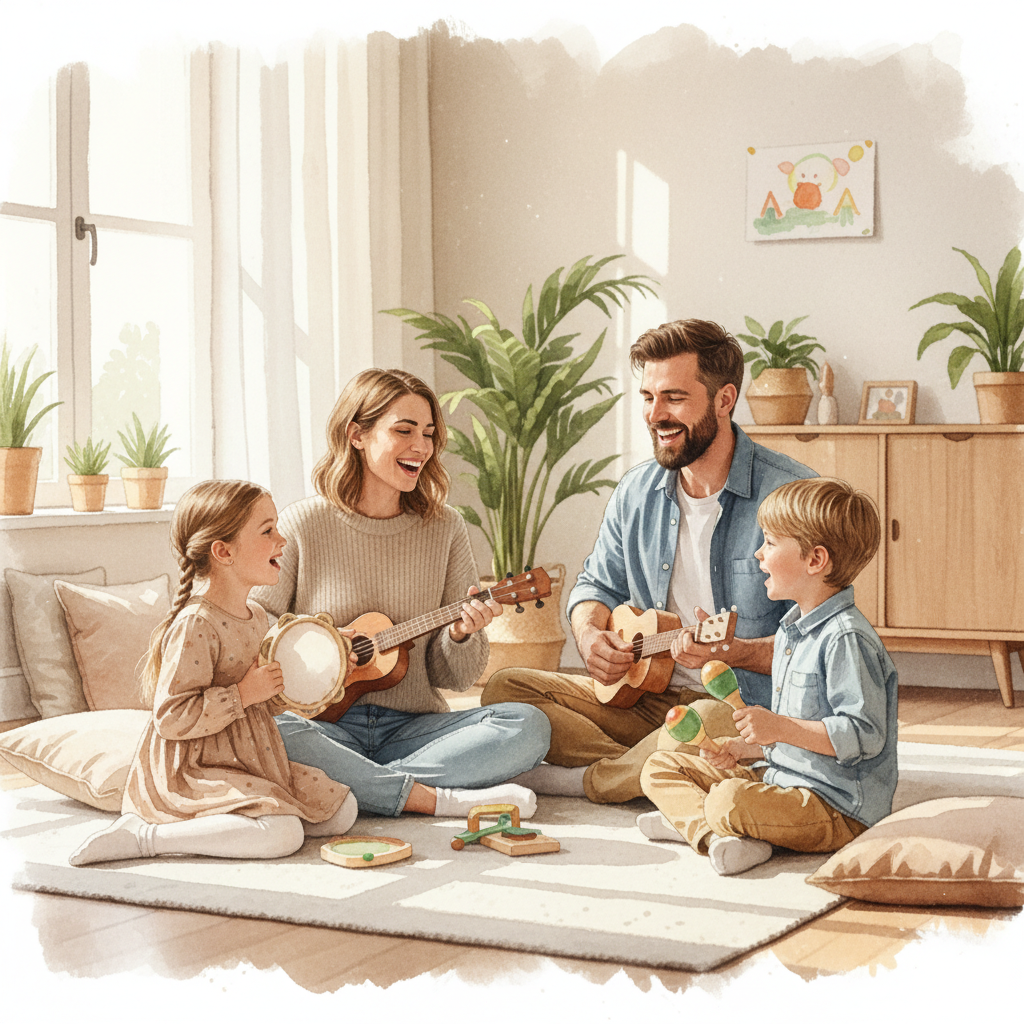
- Read a picture book daily. Point at pictures, name them, ask "what's this?"
- Expand your child's words. Child says "ball," you reply "yes, a round red ball."
- Ask open questions. Instead of "did you eat?", try "what did you most like playing today?"
- Sing and recite rhymes. Rhythm and repetition help children remember words.
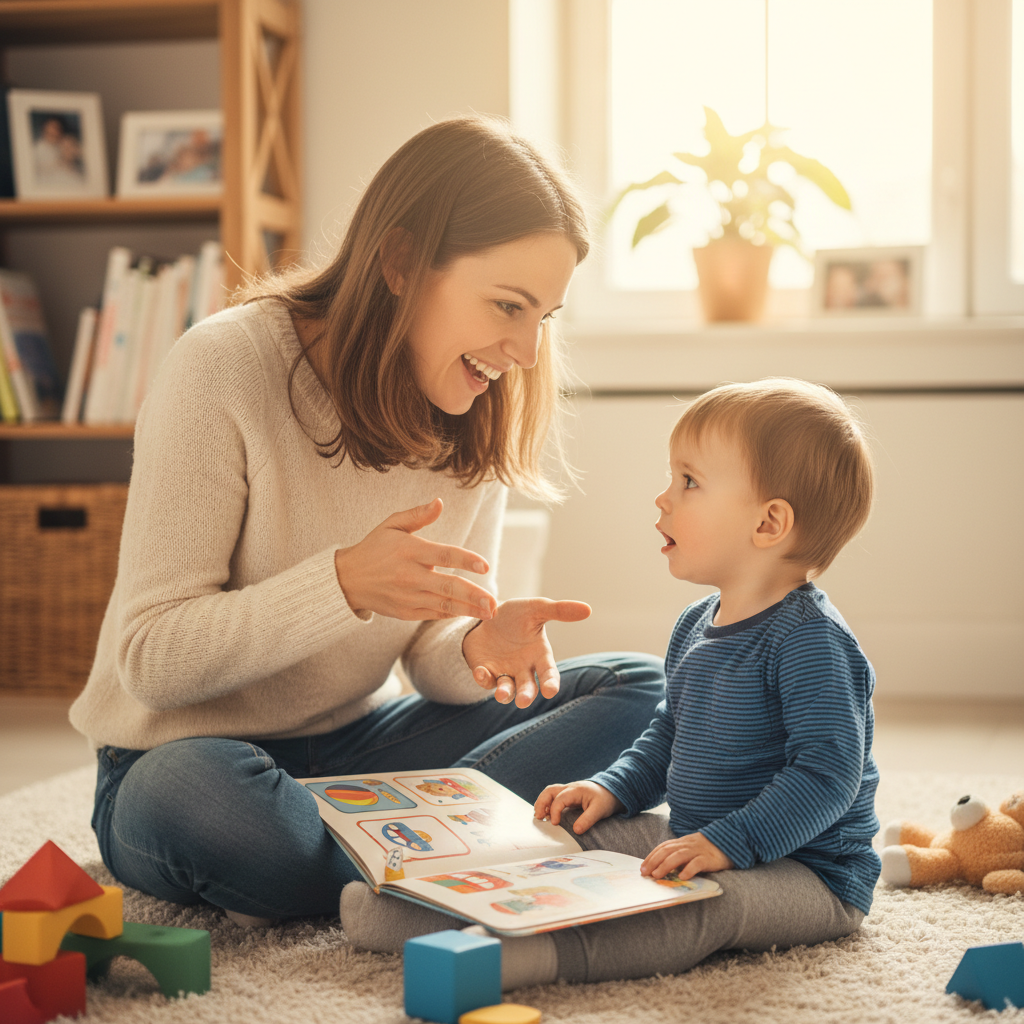
Play and sing — with your child, not alone
If you use screens, choose simple content and play together — talking about what you both see. A few games on the Wolfoo Game Portal suit vocabulary prompts:
- Learn Colors with Wolfoo (ages 3–7) — name the colours together.
- Wolfoo Word Search — getting familiar with letters and simple words.
- Wolfoo Sequence — remember and repeat an order, practising listening and attention.
These games are free to play in the browser, designed to be child-safe under COPPA, include a parental controls page, and show only age-appropriate, non-personalized ads. They only lightly complement playing alongside your child — they don't replace real conversation and shared reading, which are the main "food" for language.
When should you talk to a professional?
Every child has their own pace, but a few milestones are worth noting: no babbling by ~12 months, no single words by ~16–18 months, no two-word combinations by ~24 months, or no response to their name despite normal hearing. If concerned, talk with a pediatrician or speech-language specialist for early assessment. This is general information, not a substitute for medical care.
Frequently asked questions
Does watching cartoons help my child talk sooner?
Passive solo watching helps little. If you watch, watch together and talk about what's on screen.
My child is learning two languages — will that delay talking?
Bilingual children may mix words for a while, but that's normal and doesn't cause a true speech delay. What matters is rich interaction.
How long should I read with my child each day?
Just 10–15 minutes of reading together, consistently, is already great for vocabulary.
References
American Academy of Pediatrics (AAP), healthychildren.org; Zero to Three — on early language development.