
Helping Your Child Fall in Love with Early Numbers Through Play (Ages 3–6)
If your child isn't into numbers yet, you're not alone. Here's how to build early counting and number sense in 3–6 year olds gently, through play and everyday moments.
"Every time numbers come up, my child wanders off." If that sounds familiar, you're in good company. Many parents worry their little one is "behind" with numbers, especially as a new school year approaches. Here's the reassuring truth: at ages 3–6, children learn math best not through flashcards or worksheets, but through play and everyday moments.
Why do early numbers matter so much?
Researchers featured in the Encyclopedia on Early Childhood Development report that a child's math skills at school entry are among the strongest predictors of later academic achievement — in some studies, even more so than early reading. This doesn't mean you need to drill your child into a prodigy. It simply means the small number experiences you offer today are quietly building your child's future confidence.
Another lovely finding, from ZERO TO THREE's Math Learning Begins at Home: when parents talk about numbers during ordinary routines ("Can you grab two apples for me?"), even very early on, it's linked to stronger math skills in the preschool years. The most powerful tool isn't in a store — it's already in your everyday conversation.
Learning through play: how little brains take in numbers
The National Association for the Education of Young Children (NAEYC) emphasizes that children understand math most deeply when numbers are tied to real things: stacking blocks, sharing snacks, comparing big and small. When a child touches, moves, and counts real objects, abstract ideas like "three" or "more than" become concrete and memorable.
Play also helps children sidestep "math fear." Research in child-development journals points to a positive, low-pressure home learning environment as a foundation for growing up without math anxiety. Put simply: the more your child sees numbers as fun, the easier it is to love them.
5 gentle ways to weave numbers into your child's day
1. Count the things your child already loves
Count the stairs going up and down, the orange slices on a plate, the red cars on the street. No separate "lesson" needed — just count out loud together.
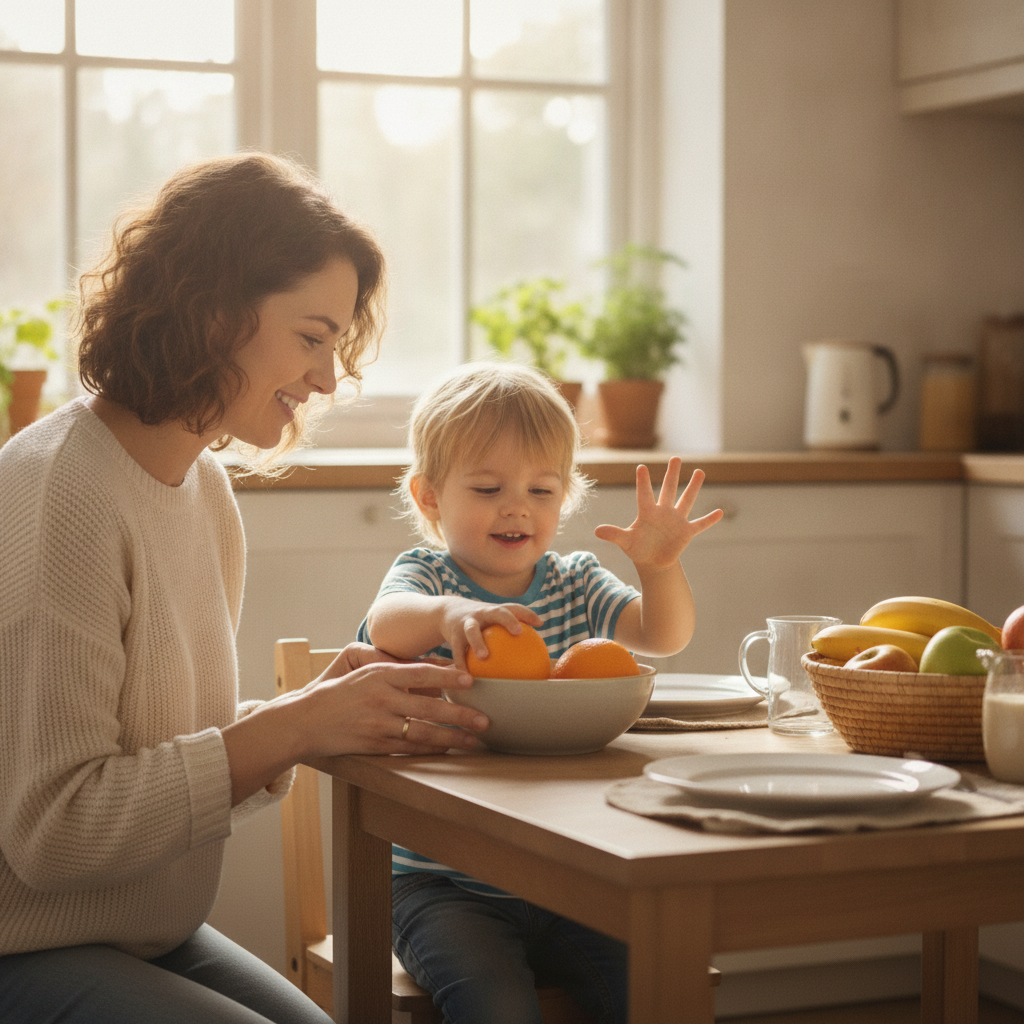
2. Turn mealtime into math time
Try: "There are three of us — how many spoons do we need?" Pairing numbers with real objects helps your child grasp what numbers are for.
3. Play sorting and comparing games
Have your child sort socks by color or line up toys from smallest to largest. These are the first building blocks of mathematical thinking.
4. Read books with numbers
Pause on each page to count the characters or objects in the pictures together.
5. Add a little screen-based number play — thoughtfully
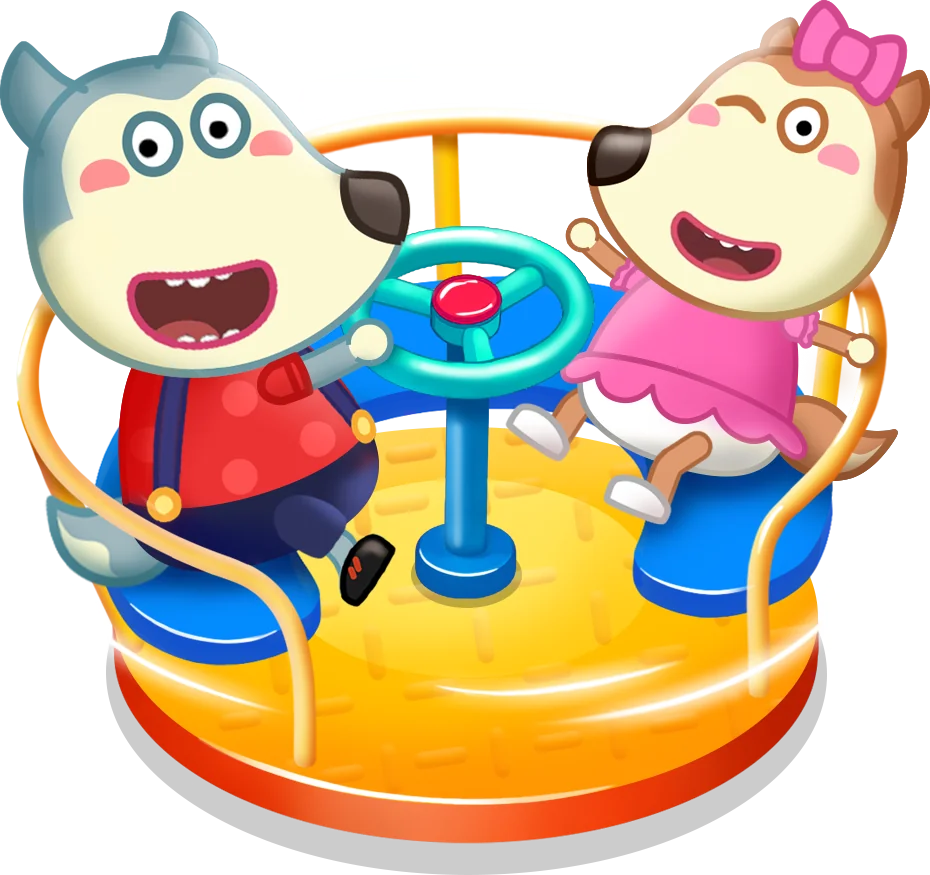
Once your child is comfortable counting in real life, an age-appropriate number game can be a fun place to practice. For example, Wolfoo Math introduces counting and simple sums through gentle challenges; Wolfoo Supermarket Sort builds sorting and counting; and Wolfoo Catch lets younger kids count the items they "catch." These games are free to play, designed to be safe under COPPA standards, include parental controls, and any ads are age-appropriate and not personalized to children.
One honest note: no game replaces counting alongside you in real life. Screens are a fun supplement, not the main classroom. Think of it as one activity within a bigger picture — where you and your child explore numbers together.
The most important thing: keep it light
Your child doesn't need to count to 100 before starting school. They need to feel that numbers are familiar, useful, and fun. If today isn't the day they're interested, that's okay — try again another day, with another game. Your patience and joy are the biggest lesson of all.
Frequently asked questions
What age should my child start learning numbers?
There's no fixed "must" milestone. Children absorb numbers through everyday talk from very early on, and typically begin counting real objects around ages 2–4. What matters is natural, unpressured experience.
My child can recite to 10 but doesn't seem to understand it — is that a problem?
Very normal. Reciting the number sequence and understanding quantity are two different skills. Count real objects together to connect the two.
Can math games on a screen replace real-world learning?
No. Games are a fun supplement for practice, but the foundation still comes from counting, comparing, and talking about numbers during real, shared moments with you.
Sources
- NAEYC — Playful Math = Engaged Learning; Nurturing Early Math Play and Discovery
- ZERO TO THREE — Math Learning Begins at Home (Eason & Levine, 2017)
- Encyclopedia on Early Childhood Development — Early predictors of mathematics achievement
- American Academy of Pediatrics — The Power of Play (Yogman et al., 2018)