

My Kid Eats the Same 5 Foods Every Day — I Was Worried About the Wrong Thing
My child eats the same 5 foods for weeks, pushing away anything new — a parent's honest story about preschool picky eating and what I learned.
Short answer: if your child will only eat a small rotation of familiar foods for weeks or months at a time — and pushes away, clamps their mouth shut, or even gags at anything unfamiliar — this is almost certainly ordinary preschool picky eating (often called food neophobia), not a sign you're doing something wrong.
Tuesday night I made a new orange-glazed chicken recipe, plated it nicely, the whole thing. My 4-year-old took one look, pushed the plate away, and said "I don't like it." I coaxed, I bargained, I tried hiding tiny pieces under rice — nothing. I ended up boiling a quick pot of buttered noodles, the third "backup meal" I'd cooked that week after a main dish got rejected on sight. Standing in the kitchen at 7pm, I wondered what I was doing wrong.
Is this level of picky eating actually normal?
Yes. The American Academy of Pediatrics (AAP) and other pediatric sources describe picky eating — often called food neophobia, a wariness of unfamiliar food — as a very common part of development in children ages 2 to 6, one that can linger through much of the preschool years rather than passing in a few weeks. Your child isn't doing this on purpose to make mealtimes hard — it's a natural caution reflex toward anything unfamiliar.
- Eating the same 5-10 "safe" foods on repeat for weeks.
- Rejecting a new food on sight, before even tasting it.
- Reacting more to texture (anything slimy, lumpy, mixed) than to taste.
- Still gaining weight and height steadily, still playing with normal energy.
What I actually changed
I came across the "Division of Responsibility in Feeding," a framework from the Ellyn Satter Institute: the parent decides what food is offered, and when and where; the child decides whether to eat it, and how much. Simple to read, harder to actually practice — I had to drop a few habits.
- I stopped cooking a backup meal. I still serve the new dish, but I keep one familiar "safe" food on the table too (plain rice, bread) so no one goes hungry — without making a second full meal.
- No pressuring, no bargaining, no dessert-for-a-bite deals. Every time I said "finish your vegetables and you get dessert," the vegetables got a worse reputation the next time around.
- I keep serving the new food, without giving up after one or two "no"s. Getting used to an unfamiliar taste takes young kids longer than most adults expect — just seeing a food on the table repeatedly, with zero pressure, is already a small step forward.
- I let her help prep the meal. Washing vegetables, plating food — kids tend to get more curious about something they had a hand in making.
A few games that build familiarity with food — away from the actual table
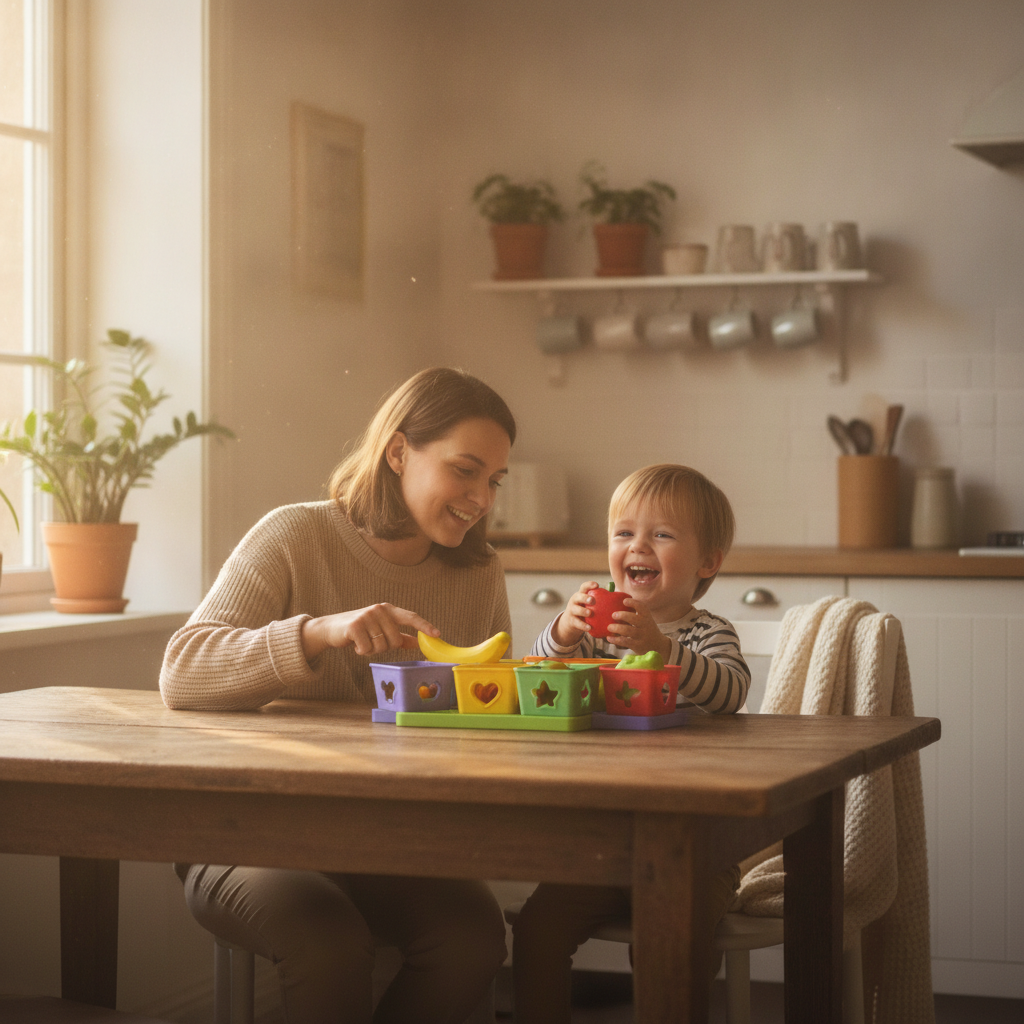
To be clear upfront: no game "fixes" picky eating, and I never use these as a trade for taking one more bite. They're just a way for her to see, name, and sort pictures of food in a fun setting, completely separate from mealtime pressure.
Wolfoo Bento Master (ages 4-10) has kids arrange food items into a bento box by color and shape — a gentle way to get visually familiar with many different foods without tasting any of them.
Wolfoo Supermarket Sort (ages 3-9) has kids sort vegetables, fruit, and packaged items — practice naming and recognizing food, a small step before that same food shows up for real on the table.
Wolfoo's World Kitchen (ages 3-7) lets kids "cook" dishes from different cultures in the game — a playful way for unfamiliar food to start looking familiar before they encounter it in real life.
What this doesn't do
Being honest: none of the above makes picky eating disappear in a week, and no game replaces the actual act of tasting and swallowing a new food. Some weeks I do everything "right" — no pressure, still offering new foods, still playing these games together — and she still eats the same 5 things. That doesn't mean I'm failing; picky eating at this age tends to improve very slowly, often over months rather than weeks.
When it's worth a real conversation (talk to your pediatrician)
- Noticeable weight loss, or a growth curve that's flattened over several months.
- The list of accepted foods keeps shrinking instead of staying stable or slowly widening.
- Gagging, panic, or extreme avoidance tied to an entire texture category (e.g., anything with sauce).
- Mealtimes have become a daily source of major stress for the whole family, for weeks with no improvement.
FAQ
Is picky eating a sign of a nutrient deficiency?
Not necessarily. Most picky eaters still grow normally as long as their "safe" foods cover some variety. If you're worried about nutrition specifically, a pediatrician can assess that properly rather than guessing.
Should I force my child to eat vegetables?
Based on the Division of Responsibility model, no — pressuring a child to eat something tends to make them avoid it for longer. Keep offering it, without comment or pressure.
When does picky eating usually stop?
There's no fixed timeline — many kids broaden their diet gradually through the early school years, but the pace varies a lot from child to child.
If dinner at your house also turns into a negotiation some nights, Reward Charts for Kids: Building a Habit, Not a Bargain has more on building routines without turning every meal into a trade. And if you've ever stood your ground with a child mid-meltdown and wondered whether to just give in, My Kid Melted Down in the Grocery Store has a few more ideas on holding a limit calmly.
Sources
- Ellyn Satter Institute — The Satter Approach to Feeding, on the Division of Responsibility in Feeding model.
- American Academy of Pediatrics (AAP) / HealthyChildren.org, on picky eating (food neophobia) as a common developmental stage in preschoolers.
This article shares a personal parenting experience alongside general guidance for parents, and is not a substitute for professional nutrition or medical advice.