
Early Math Through Play: Why It Matters and How to Start with Wolfoo Math
Early math is one of the strongest predictors of later success — but “early” doesn't mean drilling. Why kids should meet math through play, and how to start gently with Wolfoo Math.
Many parents either worry their
child “isn't ready” for math, or rush to flashcards and worksheets. But for
young children there's a truth that's both reassuring and important: early math
really matters — and the best way to approach it at this age is through play,
not pressure.
Key takeaways
•
Early math is one of the strongest predictors of later
academic achievement.
•
“Early” means meeting math through play (counting,
matching, number sense) — not drilling or pressure.
•
Wolfoo Math makes practicing basic operations fun;
choose the level that fits your child's age.
•
Everyday math talk is the foundation; the game is a
complementary way to practice.
Why early math matters more
than you think
A landmark analysis drawing on 6
long-term longitudinal datasets found that, among school-entry skills, early
math skills were the STRONGEST predictor of later academic achievement — even
predicting later reading better than early reading skills did (Duncan et al.,
2007). This doesn't mean teaching the curriculum early; it means joyful early
experiences with numbers build a strong foundation.
But “early” doesn't mean
drilling
For preschoolers, math isn't in
worksheets — it's in counting stairs, sharing snacks, spotting shapes and
patterns. The American Academy of Pediatrics emphasizes that play is how
children learn, and playing with a parent builds thinking skills (Yogman et
al., 2018). Pushing drills too early can make kids fear math; the right kind of
play helps them love it.
How Wolfoo Math helps
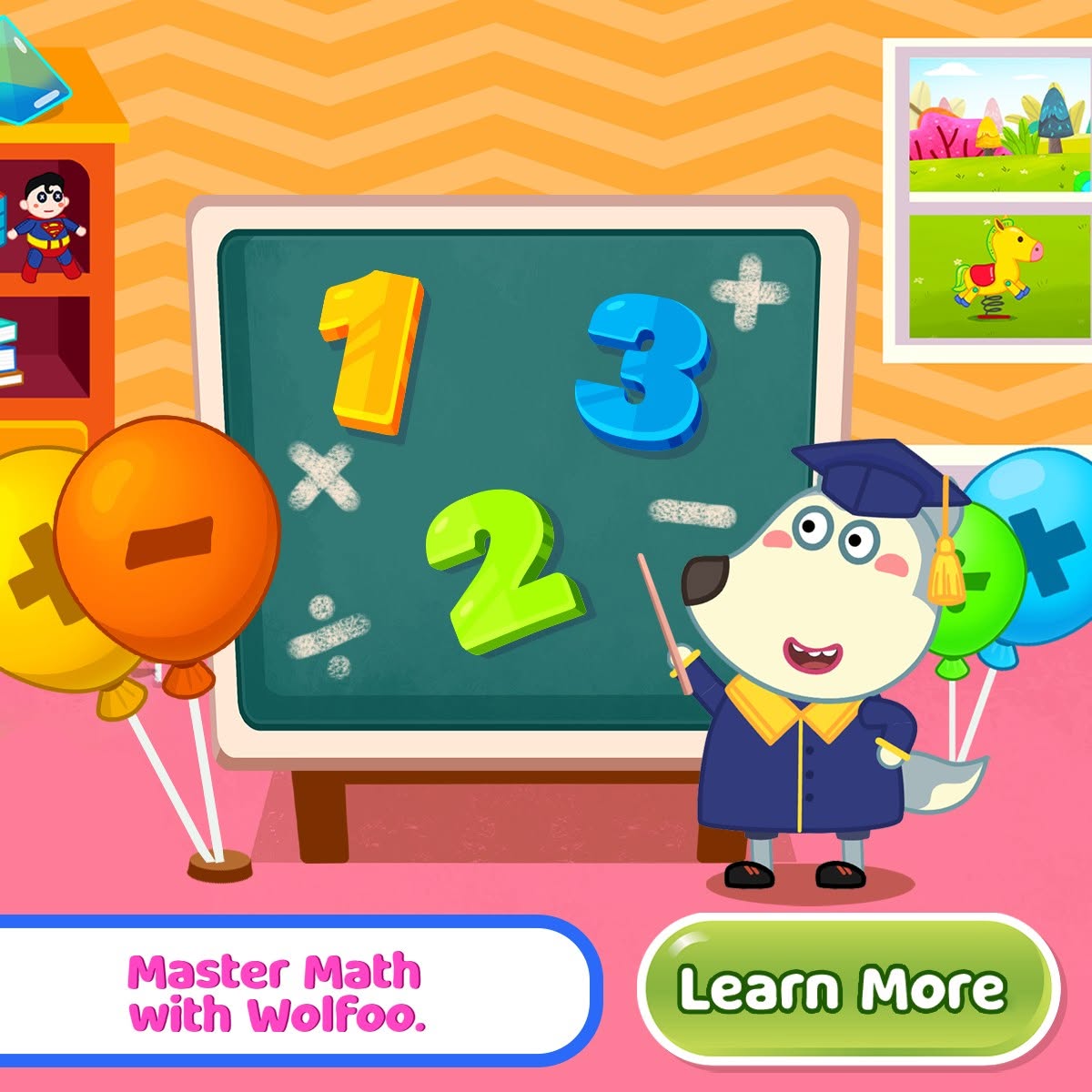
Wolfoo Math is a simple learning
game: kids practice addition, subtraction, multiplication, and division by
picking the right answer before time runs out. It's an easy game, suitable for
children around 4–10. A few tips to use it well:
•
Match the operation to the age: for 5–7s, focus on
addition/subtraction and number recognition; save multiplication/division for
when they're older.
•
Because the game is timed, play alongside your child
and keep it light — if the clock stresses them, slow down and encourage.
•
Praise effort and their thinking, not just the right
answer.
For kids still working on
numbers and shapes, you can also try Wolfoo Geometry Connect (play at
/games/play/wolfoo-geometry-connect) before moving on to the operations in
Wolfoo Math (play at /games/play/wolfoo-math).
Bring math into real life
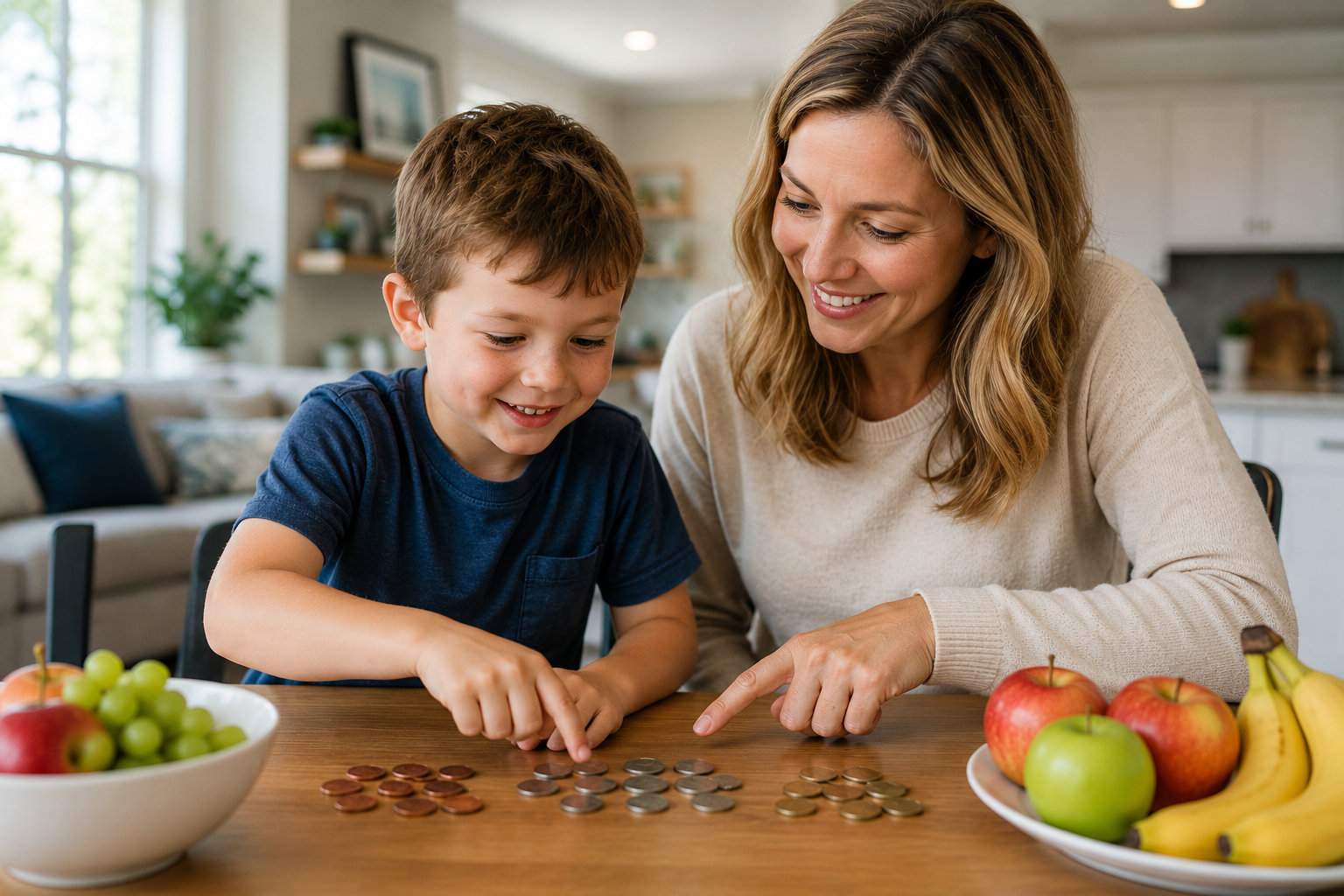
Turn numbers into a daily game:
count the stairs as you climb, share cookies equally, “buy” toys with play
money and count the change. Pairing the game with real-world math helps your
child see numbers everywhere — and remember them longer.
👉
Try a round of Wolfoo Math with your child today.
Sources
• Duncan, G. J., et al. (2007).
School Readiness and Later Achievement. Developmental Psychology (APA). https://www.apa.org/pubs/journals/releases/dev-4361428.pdf
• Yogman, M., et al. (2018). The
Power of Play. Pediatrics — American Academy of Pediatrics. https://publications.aap.org/pediatrics/article/142/3/e20182058/38649/The-Power-of-Play-A-Pediatric-Role-in-Enhancing