

Why Is My Child Afraid of the Dark? Understanding the Fear and How to Help
Your child suddenly needs the light on and is scared of the dark? For ages 3-6 this is a normal phase. Here's why it happens and gentle ways to help your child feel safe again.
Your child used to sleep just fine, and then one night they want every light on, cry when you reach for the switch, or pad into your room at 2 a.m. If that sounds familiar, take a breath: you haven't done anything wrong, and your child is doing just fine too. Fear of the dark is one of the most common childhood fears, and for most kids aged 3 to 6, it's a normal part of growing up.
Why is my child suddenly afraid of the dark?
According to the early-childhood organization ZERO TO THREE, from around age two-and-a-half children live in a world of pretend and don't yet fully understand the difference between fantasy and reality. In their minds, anything can happen at night: the dragon from the bedtime story or the clown from the party could step right out of the shadows. At the same time, children aged 3-6 are beginning to realize the outside world is big and could be dangerous, and they have no clear sense of time, so going to bed can feel like they're unsure when they'll see you again.
In other words, the very same imagination that makes your child creative and curious is the thing painting scary shapes on the wall. It's a sign their brain is developing, not a sign that your child is "weak" or that you've "spoiled" them.
What to avoid, even when you're tempted
When your child is scared, the natural instinct is to scoop them into your bed to keep the peace. But experts note that if you regularly move your child to your bed, they may learn that their own bedroom is actually a scary place to sleep. Similarly, one calm check under the bed or in the closet is fine, but repeated, elaborate checking can accidentally send the message that the closet really is dangerous.
Try not to dismiss or laugh off the fear ("There's nothing to be scared of!"). To your child, the fear is real. What they need isn't to be proven wrong, but to feel understood and accompanied.
Gentle ways to help
1. Name and acknowledge the fear
Before you reassure, show your child you understand. A phrase you can borrow: "I know, the night-time shadows can look a little spooky, can't they. I'm right here with you." When a feeling is named, children often settle more quickly.
2. Give your child "tools" to fight the fear
Kids feel calmer when they have a sense of control. Choose solutions together: a soft nightlight, a special stuffed "night guardian," the door left slightly open. You might sit with your child for a few minutes and then leave, rather than staying until they're fully asleep, so they gradually trust that their room is a safe place.
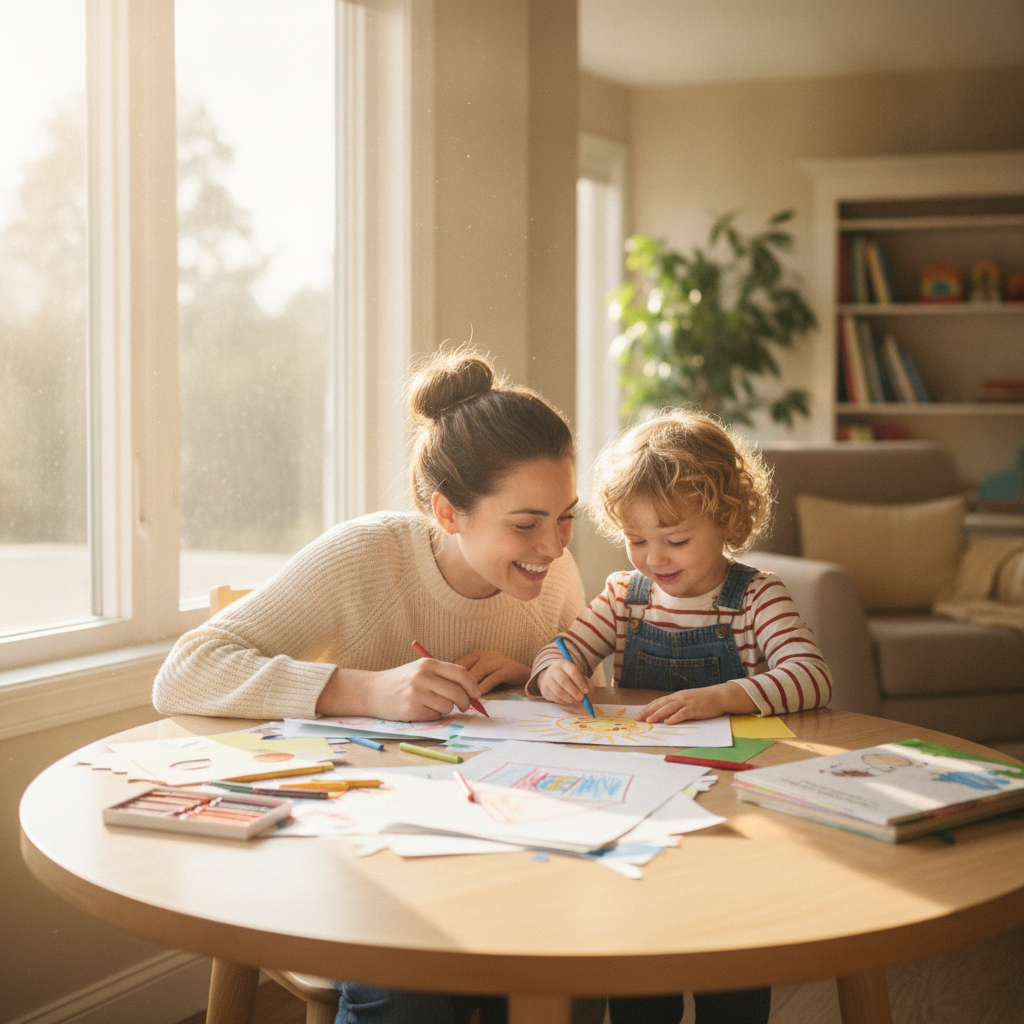
3. During the day, steer imagination toward the positive
Because night-time fears come from the imagination, daytime is a great chance to fill that imagination with warm, cheerful images. Drawing, storytelling, and coloring together all help children practise calm and express feelings. If your family has a few minutes of screen time, choose gentle games with nothing spooky. For example, Learn Colors with Wolfoo (best for ages 3-7) lets your child color and recognize colors in a cheerful mood; or Wolfoo Learning Land (ages 3-5) offers gentle discovery activities. These are easy, pleasant daytime moments together that help your child link Wolfoo with fun and safety.
Let's be honest: no game can "cure" a child's fear of the dark. What truly helps is your patient presence and time. A game is simply a gentle way to relax together during the day. Games on the site are free to play, need no download, and are safe under COPPA standards; any ads shown are age-appropriate and not personalized to children.
When should I talk to a doctor?
A passing fear of the dark is normal and usually fades on its own. But if the fear persists and interferes with your child's day-to-day life, keeps them from sleeping enough, makes them too scared to enter their room, or affects daytime activities, that's the moment to talk with your pediatrician for further guidance.
Frequently asked questions
Is it abnormal for my 4-year-old to be afraid of the dark?
Not at all. It's one of the most common fears for children aged 3-6 and is usually a normal part of development. Most children grow out of it as they get older.
Should I leave the light on all night?
A soft nightlight is perfectly fine if it helps your child feel safe. What matters most is that your child feels they have a "tool" and a choice, rather than trying to prove there's nothing scary in the room.
Can games help my child feel less afraid of the dark?
Games don't cure the fear. But a few minutes of gentle, cheerful daytime play can help your child practise calm and steer their imagination toward the positive. Your steady presence is still the deciding factor.
Sources
- ZERO TO THREE — "My 2-year-old Son is Suddenly Afraid of the Dark" and "Childhood Fears"
- ZERO TO THREE — "Nothing to Fear But Fear Itself: Responding to Toddlers' Fears"
- MGH Clay Center for Young Healthy Minds — "Fear of the Dark? 16 Ways to Help Your Child"