My Child Only Plays One Game on Repeat — Is There a Skill They're Missing?
Your child plays the same game over and over — should you worry? Here's how to tell which skill they're building, and which one might be missing.
Short answer: no, nothing is "wrong" with your child if they're obsessed with one single game and keep replaying it for weeks — child development experts say that's just how a young brain normally wires itself. But if it's nagging at you, the useful question isn't "how long has this been going on" — it's "what skill is this game actually building, and is there another one my child might be missing out on?"
You've probably lived this: your child has been locked onto one game for almost a month, plays the exact same level as yesterday, and never gets bored. Suggest something else and they shake their head immediately. Then you see other kids their age playing all sorts of different things, and you wonder: is my child stuck in one narrow lane?
My child keeps replaying the same game for weeks — should I worry?
According to Rebecca Parlakian (ZERO TO THREE) and Harvard neuroscientist Charles Nelson — both quoted by NPR — repetition is how a young brain "wires" itself: playing the same thing over and over fires the same neurons together, strengthening the circuit behind that skill. Knowing what comes next also gives a child a real sense of safety, not a sign of falling behind.
In other words: your child is practicing one skill very deeply, not wasting time. The more useful question isn't "has this gone on too long" — it's which skill that is, and what about the other 7?
Why look at skill, not just age or how long they've been playing
According to the Center on the Developing Child at Harvard University, much of a preschooler's learning and social ability rests on a group of skills called "executive function" — built from three core parts: working memory (holding information in mind to use it), attentional control (staying focused, filtering distraction), and cognitive flexibility (shifting how you think when the situation changes). These skills don't appear on their own — according to NAEYC (the National Association for the Education of Young Children), they're built through repeated practice, and the right kind of play is a natural, low-pressure way to get that practice.
On the portal, we group games into 8 specific skill areas so you can see which one your child is going deep on right now — and gently introduce another group later if you'd like more variety, with no need to force a switch today.
8 foundational skills — and the type of game that builds each one
1. Problem solving (the 🧩 Solve It! group)
Your child tries one approach, notices it isn't working, and switches — instead of giving up or repeating the same move. Wolfoo Tangram (ages 3–8) has your child arrange shapes into a larger picture, which means trial and error to find where each piece actually fits.
2. Classification (the 🔷 Match It! group)
Your child notices what things have in common and sorts them into the right group — a foundation for early math thinking, per the Illinois Early Learning Project. Wolfoo Supermarket Sort (ages 3–9) has your child put items on the right shelf by category, close to sorting real toys at home.
3. Observation (the 🔍 Let's Explore! group)
Your child notices detail across a wide scene instead of skimming past it. Wolfoo Space Adventure (ages 5–14) takes your child through exploration levels that reward looking closely before acting.
4. Coordination (the 👆 Catch It! group)
Your child times hand movement to match what the eyes see — a fine motor skill that later supports handwriting, buttoning a shirt, and plenty else. Wolfoo Archery Blast (ages 4–10) has your child judge angle and timing to hit a target.
5. Early learning (the 🔤 ABC & 123 group)
Your child gets familiar with letters, numbers, and colors — the first building blocks before school starts. Wolfoo Color Learning (ages 3–7) is right at the age for naming and recognizing colors through short challenges.
6. Focus (the 🏎️ Let's Race! group)
Your child holds attention on one ongoing thing without drifting off partway through — the "attentional control" piece named above. Wolfoo Town Run (ages 4–10) needs continuous attention to the track to dodge obstacles at the right moment.
7. Memory (the 👀 Spot It! group)
Your child holds an image in mind and compares it to what's in front of them. Wolfoo Spot the Difference (ages 4–12) has your child compare two near-identical pictures to find what changed — also the most-played game on the portal.
8. Creativity (the 🎨 Create It! group)
Your child makes something in their own way, without one fixed correct answer to reach. Wolfoo Birthday Pixel Art (ages 4–12) lets your child pick colors and decide what their picture looks like.
What these 8 groups don't do
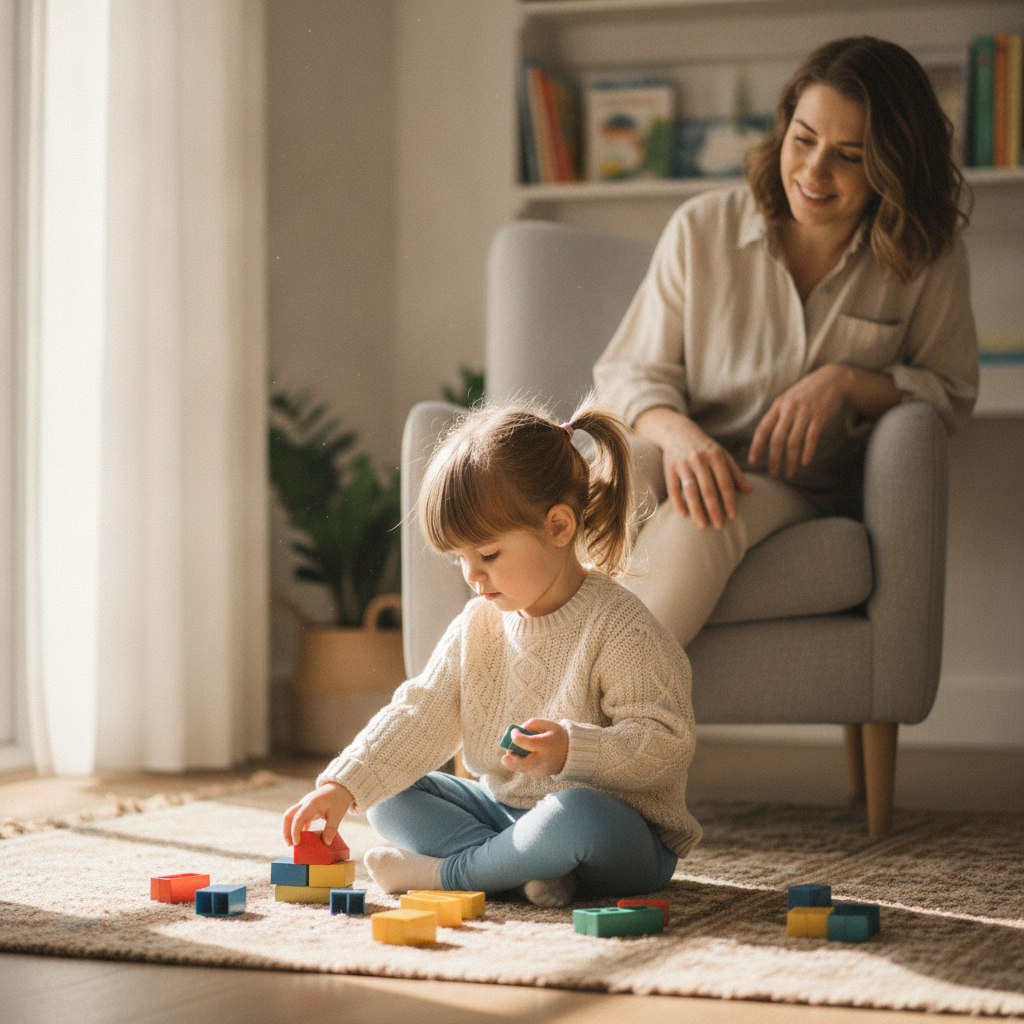
To be honest about it: this grouping is a practical shortcut for choosing games, not a precise scientific measure of your child's brain. A "Focus" game doesn't automatically make a child better at focusing on homework — it practices one kind of attention in one specific setting. And none of these 8 skills replace real-world experience: reading together, outdoor movement, and unstructured play with other kids do things no screen game can substitute for.
Your child doesn't need to play all 8 groups every day, and you don't need to force a switch just because they're obsessed with one right now. If they're going deep on one group, let them keep going — genuine interest matters more than covering every skill evenly. If your child is heading into kindergarten and you'd rather think in terms of school readiness than game groups, our 5-skill readiness checklist through play goes further into that angle.
When it's worth asking about properly
Some variation between kids is normal — one child leans toward observation, another toward movement, and some need more time with something familiar before they're ready to try new. A few signs are worth raising with a teacher or pediatrician rather than waiting out:
- Your child reacts with intense, prolonged distress (long crying, big meltdowns) any time something new is suggested — not just a mild "no thanks."
- Your child can't hold attention for even a couple of minutes on anything, including things they genuinely enjoy.
- Your child struggles noticeably with one specific skill compared to peers their age, over several weeks rather than one tired day.
- A teacher notices the same pattern independently — two settings seeing it is worth listening to.
FAQ
My child only plays one game or one type of game for weeks — is that abnormal?
No. Repetition is how young brains wire themselves and how children find comfort in the familiar. It's only worth a closer look if your child reacts with intense distress to any suggestion of trying something new.
Is this 8-group system an official scientific classification?
No. It's the portal's own practical grouping, based on common areas of early childhood skill development, meant to help parents pick games by need — not a clinical assessment tool.
Does a "Focus" game help my child concentrate on schoolwork?
Not directly. It practices a kind of attention inside the game's context — it doesn't automatically transfer to sitting still through homework.
Is this the same as the 8 types of intelligence (Gardner)?
No, they're different. The 8 types of intelligence is a psychological theory about how each person learns best; the 8 groups here are the portal's own way of sorting games by the specific skill each one practices. The two frameworks can complement each other, but they aren't the same thing.
Sources
- NPR — Again! Again! Here's why toddlers love to do things on repeat (Jan 2024), quoting Rebecca Parlakian (ZERO TO THREE) and Harvard neuroscientist Charles Nelson.
- Center on the Developing Child, Harvard University — What Is Executive Function?, on the three components of working memory, attentional control, and cognitive flexibility.
- NAEYC (Wiltshire & Scott, Young Children Journal, 2024) — Building Executive Function Skills Through Games, on how games build executive function in young children.
- Illinois Early Learning Project — Sorting, Classifying, and Organizing, on the role of classification and sorting skills in early math thinking.
This article is general guidance for parents and is not a substitute for a developmental assessment from an educator or medical professional.