

Why Does My Child Cover Their Ears at Everyday Sounds?
Your child covers their ears at the vacuum or a hand dryer? That's usually normal sound sensitivity, not overreacting. How to help, and when to ask a doctor.
Short answer: if your child claps their hands over their ears, cries, or bolts out of the room the moment a vacuum cleaner, hand dryer, car horn, or firework goes off — sounds that barely register for anyone else — this is almost always a common form of sound sensitivity in young children, not your child overreacting or being difficult. It's worth a closer look only when the reaction is intense, doesn't ease over time, or starts blocking ordinary daily life.
A familiar scene: you switch on the vacuum to clean the living room, and your child is already bolting for their bedroom, hands clamped over their ears, face crumpling like they're about to cry. In a public restroom, the automatic hand dryer roars to life, and they jump, grab your leg, and refuse to go back in next time. You're left wondering: is my child just unusually sensitive, or is this a phase that will pass?
Why does an ordinary sound feel so overwhelming to my child?
According to KidsHealth from Nemours Children's Health, sound sensitivity is fairly common in young children and often eases with age. For some kids, the brain processes sound in a way that makes ordinary noises seem louder, more uncomfortable, or even painful — a condition known as hyperacusis. KidsHealth notes that younger children in general tend to be more prone to this, and it's also more common among children on the autism spectrum.
In other words, your child isn't exaggerating when they cover their ears at the vacuum. To them, that sound genuinely is sharper and more uncomfortable than what you're hearing at the same moment.
What's typical — and what else might show up alongside it
Per KidsHealth, a child with sound sensitivity may:
- Find sounds like appliances, a flushing toilet, a hand dryer, car engines, barking dogs, or loud music too loud, or even painful.
- Cover their ears, get visibly upset, or avoid places where they've heard the sound before — refusing to go into a restroom with a hand dryer, for example.
- Seem tense, anxious, irritable, or have trouble focusing or being around others right after.
- React more strongly when they're already tired or stressed.
Most children gradually get used to it or learn their own ways to cope as they grow. Some kids keep a baseline level of sensitivity but get better at managing it themselves over time.
What you can actually do today
Drawing on practical guidance from occupational therapists who work on sensory processing in young children, here are a few concrete starting points:
- Keep a quick mental list of their triggers. Vacuum? Hand dryer? Fireworks? Knowing ahead of time lets you prepare your child instead of being caught off guard together.
- Give a heads-up when you can. Try: "I'm about to turn on the vacuum — you can cover your ears or go play in your room."
- Hand them a tool, not just endurance. Teaching them to cover their own ears, or keeping noise-reducing headphones on hand, gives your child a sense of control instead of simply having to tough it out.
- Help them reset after a sudden noise. A firm hug, a few minutes in a quiet corner, or a familiar activity helps their nervous system settle back down faster.
- Loop in teachers and caregivers. So they can give a warning before a fire drill or school bell, or offer support in the moment.
You don't need to do all of these at once. Pick one or two that fit your child, and use them consistently rather than trying everything once and dropping it.
Being honest: no game "cures" sound sensitivity
No app or game makes a child's ears less sensitive after a few rounds of play. Sensory sensitivity is how your child's nervous system processes the world — it doesn't switch off because of a game, no matter how quiet.
What a quiet game can offer is a genuine pause — no sudden sound effects, no win-or-lose pressure — a place for your child to reset after a moment of overload. Wolfoo Blossom Garden lets your child tend a small garden at their own pace, with no sudden alerts or countdown timers. Wolfoo Tangram gives them a quiet shape puzzle to focus on, piece by piece, instead of whatever's happening around them.
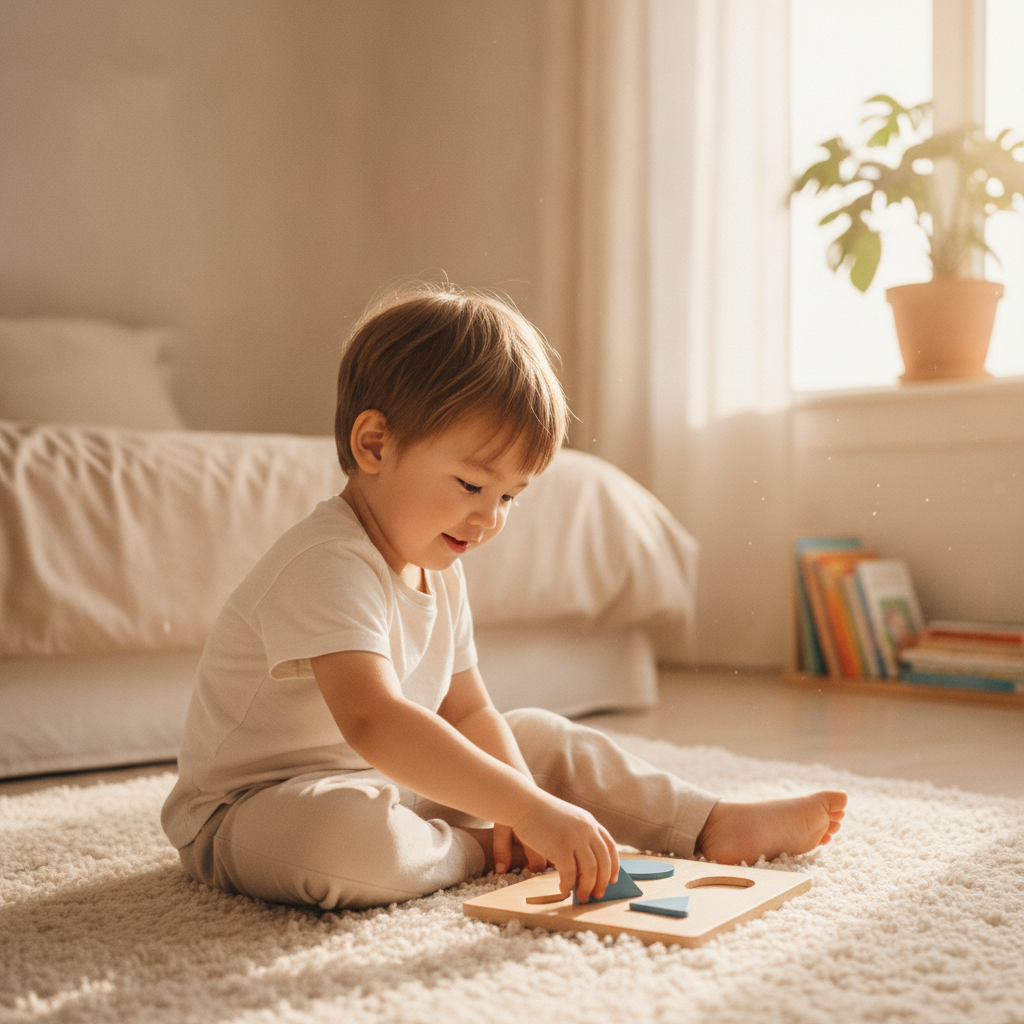
Neither game replaces your child learning to self-soothe out in the real world. They're just a small, quiet corner — a place to practice the feeling of "things are okay" before heading back out into a world full of sound.
When it's worth asking for real help
Most sound-sensitive kids don't need medical intervention. Per KidsHealth, it's worth seeing an ear, nose and throat doctor (ENT) or an audiologist when:
- Your child reacts intensely to sound again and again, along with ear pain, ringing, or a feeling of pressure in the ears.
- The sensitivity appeared suddenly, or comes with a noticeable mood shift or ongoing trouble focusing.
- It's blocking ordinary activities — refusing public restrooms, dreading school because of the bell, avoiding places they used to be fine with.
- A teacher independently notices the same pattern at school.
A provider will typically ask about symptoms, examine your child's ears, and may run a hearing test to rule out other causes, such as an ear infection.
Frequently asked questions
Does sound sensitivity mean my child is autistic?
Not necessarily. Sound sensitivity is fairly common among young children generally. Per KidsHealth, it does tend to be more common in children on the autism spectrum, but plenty of sound-sensitive kids are developing entirely typically.
Will my child grow out of this?
For most kids, sensitivity eases with age, or they learn their own ways to manage it. Some retain a degree of sensitivity into later childhood.
Should I push my child to "get used to" a sound they're afraid of?
Forcing exposure usually backfires. Giving your child active tools — ear covering, headphones, advance warning — and respecting their pace tends to work better than expecting them to just tough it out.
Do the games mentioned cost anything or need an account?
No, Wolfoo's browser games are free to play, with no install or account needed, designed with child safety in line with COPPA, with parental controls and age-appropriate, non-personalized ads.
Related reading
If your child has also been frightened by Halloween costumes or masks, Why Is My Child Scared of Costumes and Masks? may help. If they also cling and won't leave your side during moments of change, see My Child Won't Leave My Side. And if an unexpected ad once gave them a scare, My Kid Got Scared by a Halloween Horror Ad covers a similar situation.
Sources
- KidsHealth from Nemours Children's Health — "Hyperacusis," medically reviewed by Jenna Pellicori-Curry, AuD (2025).
- Your Kid's Table — Alisha Grogan, MOT, OTR/L, occupational therapist, practical guidance on noise sensitivity in young children.
This article is for general information only and isn't a substitute for professional medical or audiology advice. If you're concerned about your child's sound sensitivity, talk with their teacher, pediatrician, or an ear, nose and throat specialist.