

My Child Won't Leave My Side — Is That Normal?
Your child clings to you and cries at even a brief goodbye? For most kids this age, that's a normal phase, not a sign something is wrong.
Short answer: if your child clings to you, cries, or grabs your leg every time you try to leave, even for a few minutes, at this age that's almost always a normal phase, not a sign of weak attachment or something you're doing wrong. It usually shows up more during transitions — a new classroom, a new sibling at home, coming back from a trip, or simply a morning when they're more tired than usual.
A familiar scene: you drop your child off at preschool, and the second you let go of their hand, they wrap around your leg crying "Don't go!" while the teacher gently peels them off. You walk out the door with a knot in your stomach, checking the classroom camera app all morning, wondering if you're somehow hurting them.
Why does my child still cling so hard at this age?
According to the Merck Manual, the earliest form of separation anxiety — the fear that a caregiver is simply gone for good, because object permanence hasn't formed yet — typically begins around 8 months, peaks between 10 and 18 months, and largely fades by around age 2. By ages 3 to 7, your child already understands "Mom leaves, and Mom comes back." What's happening now is something different: anxiety about a new or changing situation, where they need a bit of time to trust again that everything is still safe.
In other words, clinginess at this age isn't a developmental step backward — it's a reaction to uncertainty. A new environment, an unfamiliar person, or an unusual day at home can all bring this reaction back, even in a child who's been confidently separating from you for a while.
What's normal, and what's worth watching more closely
Most clinginess at this age falls well within the range of normal:
- Crying for a few minutes at drop-off, then settling quickly once you're out of sight.
- Showing up more in the mornings, after a long break, or around a change at home (a new baby, a move, a new classroom).
- Eating, playing, and sleeping normally at school once they've settled in.
Per the Merck Manual, what's worth a closer look is when the anxiety is severe enough to completely prevent a child from attending school or child care, or when the distress doesn't ease even after several weeks — that's the line between an ordinary developmental phase and something worth discussing with a professional.
How to help your child let go a little, without forcing it
Two clinical psychologists at the Child Mind Institute, Dr. Jennifer Louie and Dr. Rachel Busman, offer a few concrete strategies for this stage:
- Name the feeling instead of brushing it off. Try: "I know you miss me. I miss you too, and I'm so proud of you for staying at school."
- Stay calm yourself, first. Dr. Busman notes that if a parent leads with their own anxiety, the child picks up on that exact feeling. Avoid leading questions like "Are you scared?" which can accidentally signal that something is wrong.
- Send a small, familiar object with them. Dr. Louie suggests a small stone, a button, or a handkerchief — "a piece of home" that keeps the connection going.
- Practice short separations on purpose. Let them play alone in another room for a few minutes while you cook, or stay briefly with a familiar relative before trying something longer.
- Keep a consistent, brief goodbye ritual. The same hug, the same words, every time — then go. Drawing it out tends to make it harder, not easier.
Should I just sneak out so they don't cry?
It's an understandable urge — but a short, consistent, clearly-announced goodbye works better than disappearing without one. Your child needs to trust that you will always say goodbye before leaving, rather than worry you might vanish at any moment without warning.
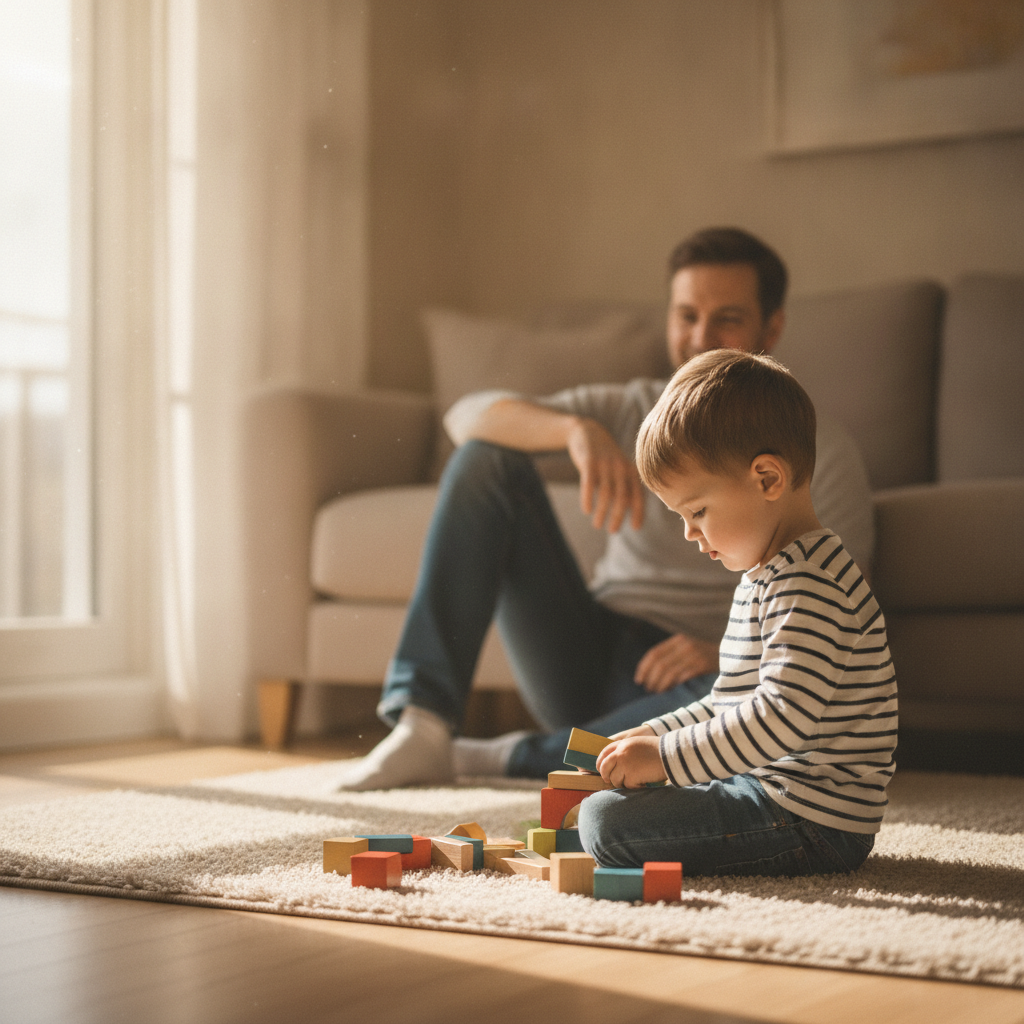
Being honest here: none of the strategies above, including the games below, make clinginess disappear after one try. This is about slowly rebuilding the belief that being apart for a while is still safe, and that belief only really sets in through repetition, over weeks. The games below work the same way — they don't "fix" clinginess, they're just a small, gentle space to practice playing alone for a few minutes at a time.
A few games for practicing short bursts of independent play
Wolfoo Color Learning is slow-paced with no win-or-lose pressure, good for a few quiet minutes of solo play while you're nearby doing something else. Wolfoo Blossom Garden lets your child tend a small garden at their own pace — nobody's rushing them, and they can stop and come back anytime. Once they're more comfortable playing solo, Wolfoo Happy Cup is a short, fun challenge that gives them a genuine sense of "I did that myself," without you sitting right next to them the whole time.
When it's worth asking for real help
Most clinginess at this age is ordinary development. A few signs worth raising with a teacher, pediatrician, or child psychologist:
- Panic that's severe, doesn't ease over the course of the day, and hasn't improved after several weeks.
- Anxiety severe enough that your child refuses school entirely, to the point you can't get them inside.
- Physical symptoms that show up alongside it — stomachaches, nausea, or repeated trouble sleeping before separations.
- A teacher independently noticing the same pattern at school — two settings flagging it is worth listening to.
Frequently asked questions
At what age do kids stop clinging like this?
There's no single age that applies to every child. Clinginess usually eases as a child gets familiar with an environment and experiences, over and over, that you really do come back — some kids need a few days, others need a few weeks, and it's normal for it to resurface during big changes like a new classroom or a new sibling.
Should I sneak away so they don't see me leave?
No. A short, familiar goodbye helps your child trust you'll always say goodbye before leaving, rather than making them more anxious about you disappearing without warning.
Does clinginess mean I'm too soft, or my child lacks affection for me?
No. It's a reaction to change or new situations, not a measure of affection or parenting style.
Do the games mentioned cost anything or need an account?
No, Wolfoo's browser games are free to play, with no install or account needed, designed with child safety in line with COPPA, and showing age-appropriate, non-personalized ads.
If your mornings before school have felt like this too, My Daughter Dreaded the First Day of School tells a similar real story. And if you'd like to build up comfortable solo play at home first, How to Get Your Child to Play Independently has more specific starting points.
Sources
- Merck Manual (Professional Version) — Separation Anxiety and Stranger Anxiety, on developmental timelines and the line between normal anxiety and separation anxiety disorder.
- Child Mind Institute — guidance from Dr. Jennifer Louie and Dr. Rachel Busman, clinical psychologists, on supporting children through separation worries.
This article is for general information only and isn't a substitute for professional medical or psychological advice. If you're concerned about the severity of your child's separation anxiety, talk with their teacher, pediatrician, or a child psychologist.