

My Kid Keeps Saying "I'm Bored" — What Should I Actually Do?
Your child says "I'm bored" again — should you fix it right away? What to do instead, plus 3 gentle starting points if they're truly stuck.
Short answer: don't rush to fill your child's boredom right away. Hearing "I'm bored, there's nothing to do" isn't a sign you're falling short as a parent, and it isn't an emergency that needs a new activity within 30 seconds. For most kids ages 3–7, a few minutes of boredom is a normal stepping stone before they come up with something themselves — as long as a parent doesn't jump in and fill it too fast.
You know this scene. The living room floor is covered in toys, your child just finished a round of a game on the tablet, then flops down: "I'm bored, Mom, what do I do now?" You look around and there's clearly plenty to play with, but you still feel a pang of guilt — maybe you haven't bought the right toys, or planned enough activities for today.
Why does my child say they're bored when there's plenty to play with?
According to clinical psychologist Dr. Stephanie A. Lee and educational specialist Jodi Musoff at the Child Mind Institute, boredom tends to show up exactly at the moment a child shifts from a ready-made activity (something someone else planned) to having to decide what comes next themselves — and that shift is genuinely hard for a young child, not a sign the house lacks enough toys. As Musoff puts it, when a child has to fill time with something of their own, "they have to create a plan, organize their materials, and solve problems" — exactly the skills adults often handle for them.
In other words, boredom itself doesn't teach anything. What actually builds the skill is your child finding their own way out of it. If a parent always steps in with a suggestion the moment boredom is announced, the child gets less practice at that part.
Does staying quiet and not reacting mean I'm ignoring my child?
Not really. PBS KIDS for Parents describes four things a short stretch of boredom can offer: it helps a child actually notice what's around them, gives the brain a break between activities, motivates them to invent something to solve the boredom, and builds a bit of independence in managing their own time. This is parenting guidance, not a measured study — but it matches what many parents notice in practice: a game a child invents after a few idle minutes often holds their attention longer than one a parent hands them ready-made.
One important caveat: this isn't advice to let a child fend entirely for themselves all day. A few minutes of boredom can be useful; an entire afternoon with no attention at all and nothing within reach to explore is a different situation.
What should I say first, before offering a suggestion?
Try holding off on the suggestion for a moment:
- Reflect the feeling back. "Yeah, you really are bored right now" — just that, no fix attached yet. Often a child just needs the feeling acknowledged before anyone solves it for them.
- Ask them, instead of deciding for them. "What do you think you could do with what's already here?" This gets your child's own thinking going, instead of you listing three ready-made options.
- Let a short gap sit there. A few minutes of doing nothing is normal and doesn't need to be filled instantly with whatever is closest at hand.
- Offer a material, not a finished activity. "Try something with these boxes" works better than "go play game A," because your child still has to invent how to play.
Should I just hand over a phone or tablet the moment they say they're bored?
This is an extremely common reflex, and not one worth feeling judged over. According to a National Poll on Children's Health from C.S. Mott Children's Hospital (University of Michigan, fielded by Ipsos, August 2025, among 710 parents of children ages 1–5), most parents of preschoolers (78%) allow phone or tablet use in specific situations — most commonly to keep a child occupied while the parent is busy (44%), during car rides (41%), or to keep a child quiet in public (34%). These are parent self-reports, not a measure of what screens actually do for a bored child — but they show that a screen is often the first reflex when boredom hits, less because it's the best option and more because it's fast and reliable.
The same poll also found that on a typical day, 88% of parents report their child engaging in physical play (running, climbing), 68% in pretend play, 54% in puzzle or block play, and 31% in video games or screen media — meaning for most families, screens are still one part of the day, not the whole of it.
3 gentle starting points if your child is truly stuck
If you've already asked them back and waited a few minutes and they're still stuck, a short game can be a starting point — as long as you pick one that lets your child decide, not one with a single correct way to play:
Wolfoo Tangram (ages 3–8) has your child arrange shapes into a picture of their own choosing — there's no fixed answer, so they have to try things out and decide for themselves.
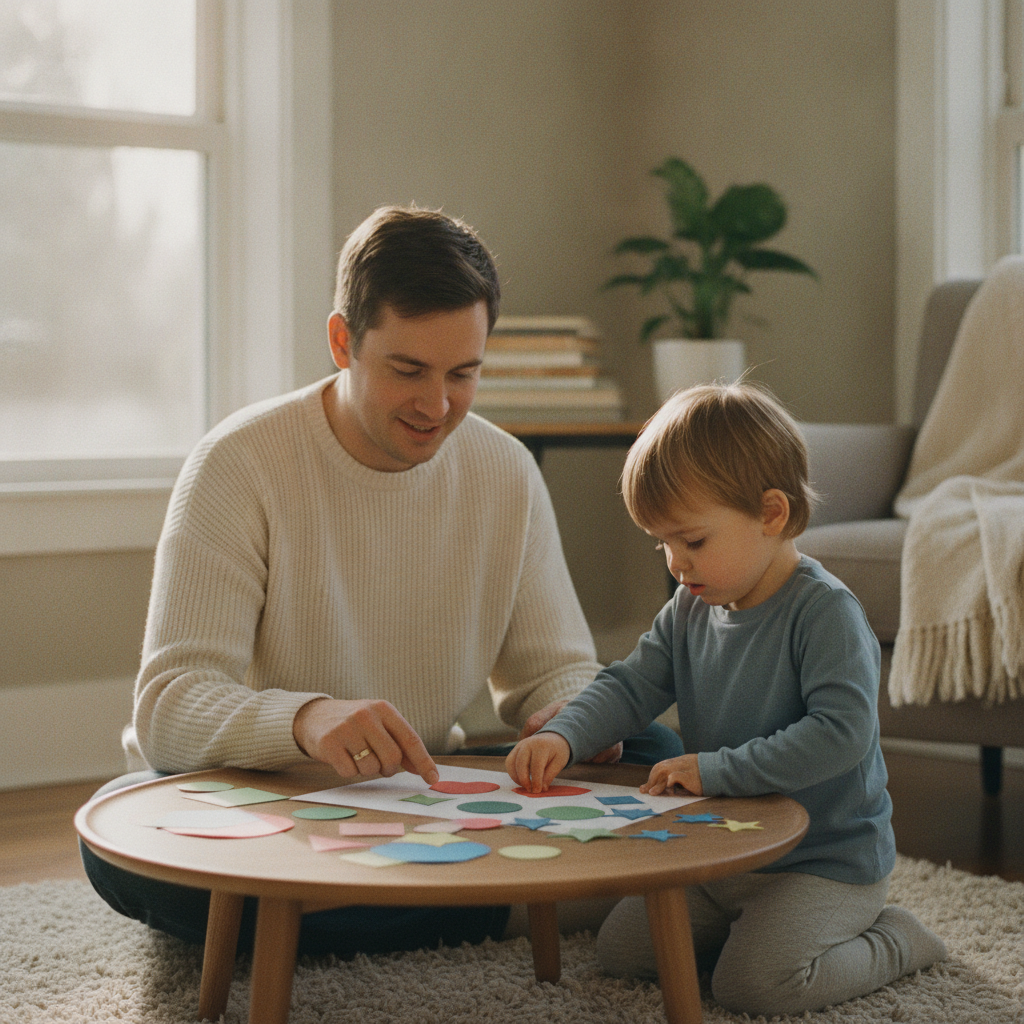
Wolfoo Blossom Garden (ages 3–8) has no timer and no winning or losing — your child decides what to plant and how to arrange the garden, right in the spirit of filling time their own way.
Wolfoo Coloring Pages (ages 5–10) lets your child pick their own colors and decide how the picture turns out — no one grading right or wrong, just their own choices.
What these 3 suggestions don't do
To be honest about it: these are starting points, not a cure for boredom. If your child uses one of these games as just another way to avoid thinking — tapping through instructions without deciding anything — it won't build the "filling time on my own" muscle that boredom itself can teach. And no screen game, however open-ended, replaces digging in the dirt outside, building a pillow fort indoors, or inventing a game with a sibling — things no screen does instead of a child. The site runs age-appropriate, non-personalized ads, and not every stretch of boredom needs a game to solve it.
When it's worth a real conversation
Complaining of boredom now and then is very normal at this age. But a few signs are worth raising with a teacher or pediatrician instead of waiting it out:
- Your child can't play independently for even a few minutes at anything, including things they used to enjoy, over several weeks.
- The "boredom" comes with a flat, low mood and little interest in much of anything, not just a moment with nothing to do.
- Your child reacts intensely (long crying, prolonged meltdowns) whenever independent play is suggested, rather than a simple "no thanks."
- A teacher notices the same difficulty starting activities independently, not just something that happens at home.
FAQ
Is it abnormal for my child to complain of boredom multiple times a day?
No, for most kids ages 3–7 this is common, especially right after a structured activity ends and free time begins. It's only worth a closer look alongside the signs listed above.
Should I ban screens entirely so my child is "forced" to invent their own games?
That's more extreme than necessary. The issue isn't the screen itself, it's when it's always the first reflex. Mixing independent play, open-ended materials, and the occasional short game is a reasonable balance.
Is playing independently with real objects better than a game on a screen?
Both have their place, and neither fully replaces the other. Our piece on helping your child play independently goes deeper into building that habit with real objects.
What if I'm too exhausted that day to think of an activity for my child?
Then it's fine to let your child sit with a bit of boredom — that's actually a good chance for them to practice filling the time themselves. Our piece on 5 low-energy ways to connect when you're exhausted has more ideas for those depleted days.
Sources
- Child Mind Institute — The Benefits of Boredom, quoting Dr. Stephanie A. Lee (PsyD) and Jodi Musoff (MA, MEd) on how filling unstructured time builds planning, problem-solving, and frustration tolerance.
- PBS KIDS for Parents — Boredom Isn't a Bad Thing for Kids, on four described benefits: being present, brain breaks, creativity, and independence.
- C.S. Mott Children's Hospital National Poll on Children's Health (University of Michigan, fielded by Ipsos, Aug 2025, n=710 parents of children ages 1–5), on daily play-type rates and the situations in which parents allow screen use.
This article offers general guidance for parents and is not a substitute for advice from a qualified psychologist or educator.