
Why Does My Child Give Up So Easily?
Your child tries once, then quits - "I can't do it"? That's a skill still forming, not a character flaw. How to help, based on real research.
Short answer: if your child tries something once, hits a snag, and quits — shouting "I can't do it!" and shoving the pieces away — that's almost always a skill still under construction at this age, not laziness or a lack of willpower. Frustration tolerance is still forming, and the good news is it's a skill that can be practiced.
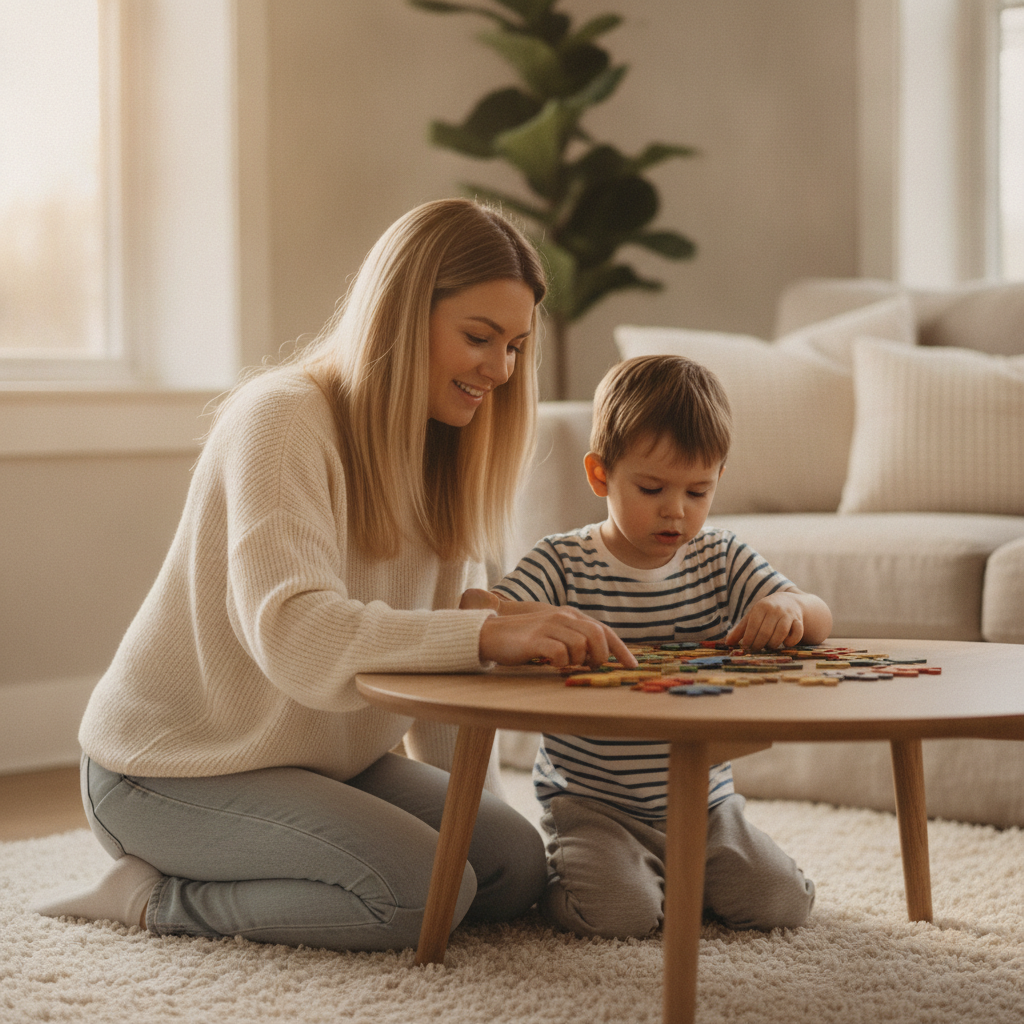
A familiar scene: your child is working on a jigsaw puzzle. A piece won't fit. They try again. Still won't fit. Then the whole box goes flying, followed by "I'm not playing anymore," and you're left standing there wondering whether to step in or let them work through it alone.
Why does my child give up so easily? It's a skill, not a personality trait
According to ZERO TO THREE, frustration tolerance describes how a child copes when things don't go their way, and how willing they are to stick with a problem long enough to find a solution. Children with lower frustration tolerance get upset quickly at the first obstacle, struggle to wait for help, and abandon a challenge fast.
In other words, your child isn't "lazy" or "not trying hard enough." They're missing one specific skill, and like learning to walk or talk, that skill takes time and repetition to build.
What's actually happening in your child's head in that moment?
Katie Hurley, LCSW, writing for PBS KIDS for Parents, explains that young children don't yet have built-in tools for managing big feelings, and emotions can flood quickly. When small frustrations throughout the day go unnoticed, they stack up and spill over into one large meltdown.
Common triggers include switching between activities, conflict with a friend, a challenge that's just out of reach, feeling misunderstood, losing control, hunger, and tiredness. If your child gives up fastest right before dinner, that's not a coincidence — that's usually when hunger and emotional reserves are both running low.
How to help your child push through frustration without doing it for them
ZERO TO THREE suggests coaching your child through the moment in stages, rather than jumping in to fix it or leaving them to struggle alone.
- Name the feeling before offering a fix. Try: "That looks really frustrating. Want to try it once more?" Resist fixing the puzzle piece yourself — ask which way they think it should turn instead.
- Break the challenge into smaller steps. Instead of the whole puzzle at once, suggest finishing one small corner first. A small win builds momentum for the next attempt.
- Use light humor to ease the tension. A playful line like "Wow, this piece is being stubborn today!" can turn a meltdown into a giggle.
- Don't disappear just because they're playing independently. Stay nearby, ready to help if asked — that's different from doing the task for them.
My child cries or melts down when they lose — should I just let them win?
Being honest here: letting your child win every time doesn't help in the long run. Kids need practice sitting with the feeling of "not yet," in a safe space with you nearby, so frustration gradually stops feeling like a catastrophe.
When your child is mid-meltdown over losing or over something being too hard, PBS KIDS suggests something simple: let them vent everything that's bothering them out loud (a spoken "mad list"), listen without judgment, then breathe slowly together before going back to the challenge. You don't need to get every step exactly right — the point is your child feels heard before being asked to calm down.
Being honest: no game makes a child persistent on its own
No app or game "installs" persistence after a few rounds. What a game can offer is a safe, low-stakes space to practice trying, failing, and trying again without feeling judged. Everything else — how you respond in the moment your child wants to quit — still matters more than any single game.
A few games for practicing "try again" without win-or-lose pressure
Wolfoo Tangram is a shape puzzle with no "losing" — only "not finished yet." Your child can rotate, retry, and rearrange as many times as they like, which makes it a gentle way to practice trial and error. Wolfoo Memory Match lets a wrong flip turn straight into another try, with no pause for being wrong. Once your child is more comfortable, Wolfoo Water Sort Puzzle increases in difficulty level by level — exactly the kind of "a little bit harder each time" challenge that builds persistence gradually.
These three games won't teach your child to stop giving up overnight — nothing does that in one afternoon. They're just a small, low-pressure space to practice the feeling of "one more try," before carrying that feeling off the screen.
When it's worth asking for real help
Most quick-to-quit moments are ordinary development. A few signs are worth raising with a pediatrician or child psychologist:
- Meltdowns over frustration last far longer or hit far harder than what you see in other kids the same age.
- Your child hurts themselves or others when frustrated.
- After many weeks of gentle practice, they still refuse to retry anything new, even very small things.
- Their teacher independently notices the same pattern — two settings flagging it is worth listening to.
FAQ
At what age do kids understand winning and losing?
Most children start grasping the concept of winning and losing more clearly around ages 4-5, but the ability to lose calmly usually develops much more slowly, often not settling until around age 7-8.
Should I let my child win every time we play?
Not every time. Letting them win occasionally to keep motivation up is fine, but they also need safe practice losing so they can build the skill of handling it.
Is giving up easily a sign my child is too young for the challenge?
Possibly. If a task is beyond their current ability, break it into smaller steps or choose an easier version first, then increase difficulty as confidence grows.
When should I get professional support?
When frustration meltdowns are severe, prolonged, risk harm, or haven't improved despite weeks of consistent, gentle strategies.
Related reading
Does your child only want to play one game on repeat? See the 8 skills kids learn through play. Want to build lasting motivation without turning it into a bargain? See Reward Charts for Kids.
Sources
- ZERO TO THREE — Frustration Tolerance
- PBS KIDS for Parents — How to Teach Frustration Tolerance to Kids (Katie Hurley, LCSW)
This article is for general information only and isn't a substitute for professional medical or psychological advice. If you're concerned about your child's behavior, talk with your pediatrician or a child psychologist.